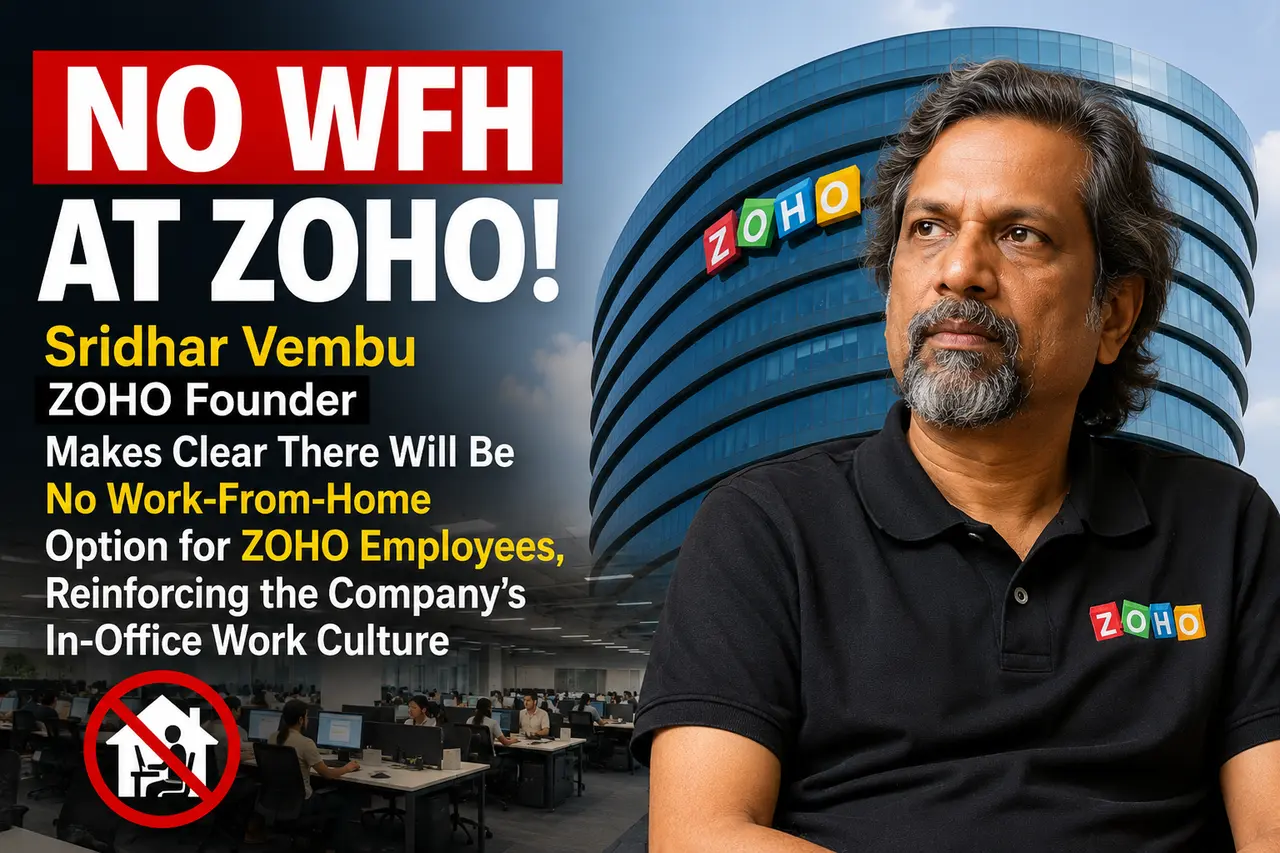
Sridhar Vembu ZOHO Founder Makes Clear There Will Be No Work-From-Home Option for ZOHO Employees (Image source: ChtGPT "AI Generated Visuals")
Our Daily Dose of Truth and Trends
Sridhar Vembu ZOHO Founder Makes Clear There Will Be No Work-From-Home Option for ZOHO Employees (Image source: ChtGPT "AI Generated Visuals")
Zoho founder Sridhar Vembu told that, despite the government’s appeal to reduce fuel consumption, the company will not expand its ‘work from home’ options. He noted that working together face-to-face is more effective for R&D, while Zoho is adopting other sustainability measures.
At a time when a debate is underway in India regarding whether ‘work-from-home’ should be reintroduced in some form to curb fuel consumption amidst the current era of global uncertainty, Sridhar Vembu has made it clear that Zoho has no plans to expand its remote work arrangements for its employees. The company’s founder stated that in-person collaboration continues to yield superior results—particularly for Research and Development (R&D) teams—even though Prime Minister Narendra Modi recently encouraged companies and citizens to re-adopt certain habits from the COVID era, such as online meetings and remote work, in an effort to reduce fuel usage.
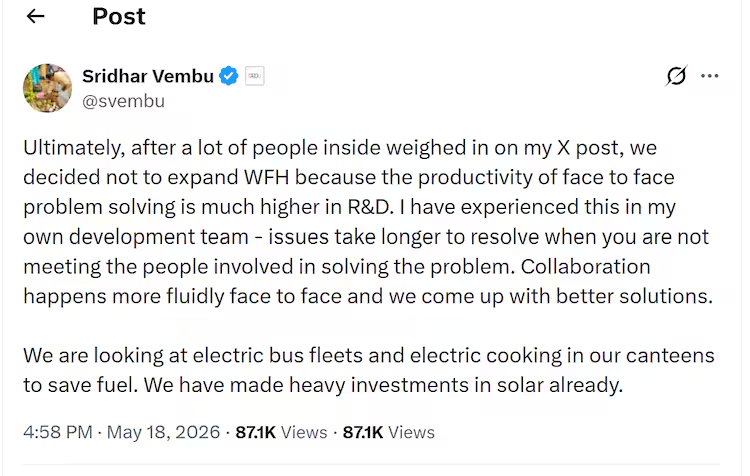
Vembu already Explained on X through his Post that following his previous comments on work culture—and the subsequent online reactions—the company internally discussed the concept. However, he noted that Zoho ultimately decided against expanding ‘work-from-home’ options, as working together face-to-face is more effective for solving complex problems.
“Ultimately, after several people internally shared their views on my X post, we decided not to extend WFH (Work From Home), because face-to-face collaboration in R&D leads to significantly higher productivity,” Vembu Expressed on X.
He further added that his own experience with development teams suggests that when employees work remotely, it often takes longer for problems to be resolved. According to him, when teams are co-located, spontaneous collaboration occurs more naturally, leading to better ideas and faster problem-solving.
“I have experienced this within my own development team—when you do not meet directly with the people involved in solving a problem, it takes longer for issues to be resolved. Working face-to-face facilitates easier collaboration and enables us to come up with better solutions,” he said.
PM Narendra Modi recently encouraged businesses and government departments to once again consider work-from-home arrangements wherever possible, especially to reduce unnecessary travel, save fuel costs, and minimize pressure on foreign exchange reserves. His remarks came at a time when global economic uncertainty, rising energy prices, and geopolitical tensions are affecting markets across the world. The government believes that adopting digital work practices can help companies reduce operational expenses while maintaining productivity.
Following the Prime Minister’s appeal, several companies and industry bodies, including NASSCOM, said the Indian IT sector already operates on strong hybrid and remote work systems developed after the COVID-19 pandemic. Many businesses are now reviewing travel budgets, encouraging virtual meetings, and relying more on digital collaboration tools to improve efficiency while cutting avoidable costs.
Sridhar Vembu recently clarified on X that Zoho is not planning to fully embrace permanent work-from-home culture, stating that the company prefers building a stronger in-office work environment focused on collaboration, learning, and long-term sustainability. He explained that while remote work proved useful during exceptional situations like the pandemic, face-to-face interaction remains important for innovation, mentorship, teamwork, and company culture.
Vembu also highlighted that Zoho’s approach is centred more on sustainable growth rather than blindly following trends adopted by other tech companies. Instead of expanding permanent WFH policies, he said Zoho is investing in smaller offices, rural development initiatives, and distributed workplaces closer to employees’ hometowns. According to him, this model helps reduce urban pressure, improves quality of life, and still allows employees to work in a connected office environment rather than being isolated remotely full-time.