India Inc Responds to Narendra Modi’s Call for Work-From-Home (image source: Google / Gemini "AI Generated Visuals")

Our Daily Dose of Truth and Trends
India Inc Responds to Narendra Modi’s Call for Work-From-Home (image source: Google / Gemini "AI Generated Visuals")
India’s corporate sector has started responding to Narendra Modi’s recent appeal encouraging companies to promote work-from-home practices, reduce non-essential travel, and help conserve foreign exchange reserves during a period of global economic uncertainty.
The Prime Minister reportedly urged businesses to adopt more cost-efficient operational strategies wherever possible, highlighting how reduced travel expenses and digital collaboration could help save valuable forex outflows. His comments have sparked discussions across industries about balancing productivity with economic caution.
Following the appeal, NASSCOM stated that the Indian IT sector already functions under strong hybrid work frameworks that were established during and after the COVID-19 pandemic. According to the organisation, many technology firms continue to operate with flexible work arrangements combining remote and office-based work.
Industry executives say hybrid work models have already proven effective in improving operational efficiency, reducing overhead costs, and allowing companies to maintain business continuity during uncertain times. Many firms have invested heavily in cloud infrastructure, cybersecurity systems, and digital collaboration tools to support long-term remote work capabilities.
Experts believe the government’s message is also aimed at reducing unnecessary foreign travel expenses by corporations and encouraging businesses to prioritise virtual meetings whenever possible. Companies are now reportedly reassessing travel budgets, international conferences, and non-essential business visits.
Several large IT and consulting companies have indicated that a significant portion of their workforce already operates remotely or through rotational office attendance systems. Many firms say this approach has helped maintain employee productivity while lowering infrastructure and operational costs.
Business leaders also note that flexible work arrangements have improved employee satisfaction in several sectors by reducing commuting time and offering better work-life balance. However, some companies continue to prefer partial office presence to support collaboration, training, and team coordination.
Economists suggest that widespread adoption of digital work practices could contribute to reducing fuel consumption, lowering corporate travel spending, and minimising pressure on foreign exchange reserves. At the same time, they caution that sectors dependent on travel and hospitality could face indirect challenges if corporate travel slows significantly.
The IT industry, in particular, appears well-positioned to adapt quickly because of its already mature digital ecosystem. India’s software and outsourcing sector has spent years building remote delivery capabilities for international clients, making hybrid work relatively easier to implement compared to traditional industries.
Some manufacturing, logistics, and infrastructure-based sectors, however, may find it more difficult to fully transition toward work-from-home systems due to the nature of their operations. Industry analysts believe flexible adoption based on sector-specific requirements will likely become the preferred approach.
Corporate leaders have largely interpreted the Prime Minister’s remarks as a call for economic discipline rather than a mandatory nationwide work-from-home directive. Businesses are therefore expected to adopt practical measures that improve efficiency without disrupting productivity or customer service.
Experts also believe the renewed focus on remote work could accelerate India’s digital transformation further, especially in smaller cities where companies are increasingly hiring remote talent. This may eventually help reduce pressure on metro infrastructure while expanding employment opportunities across regions.
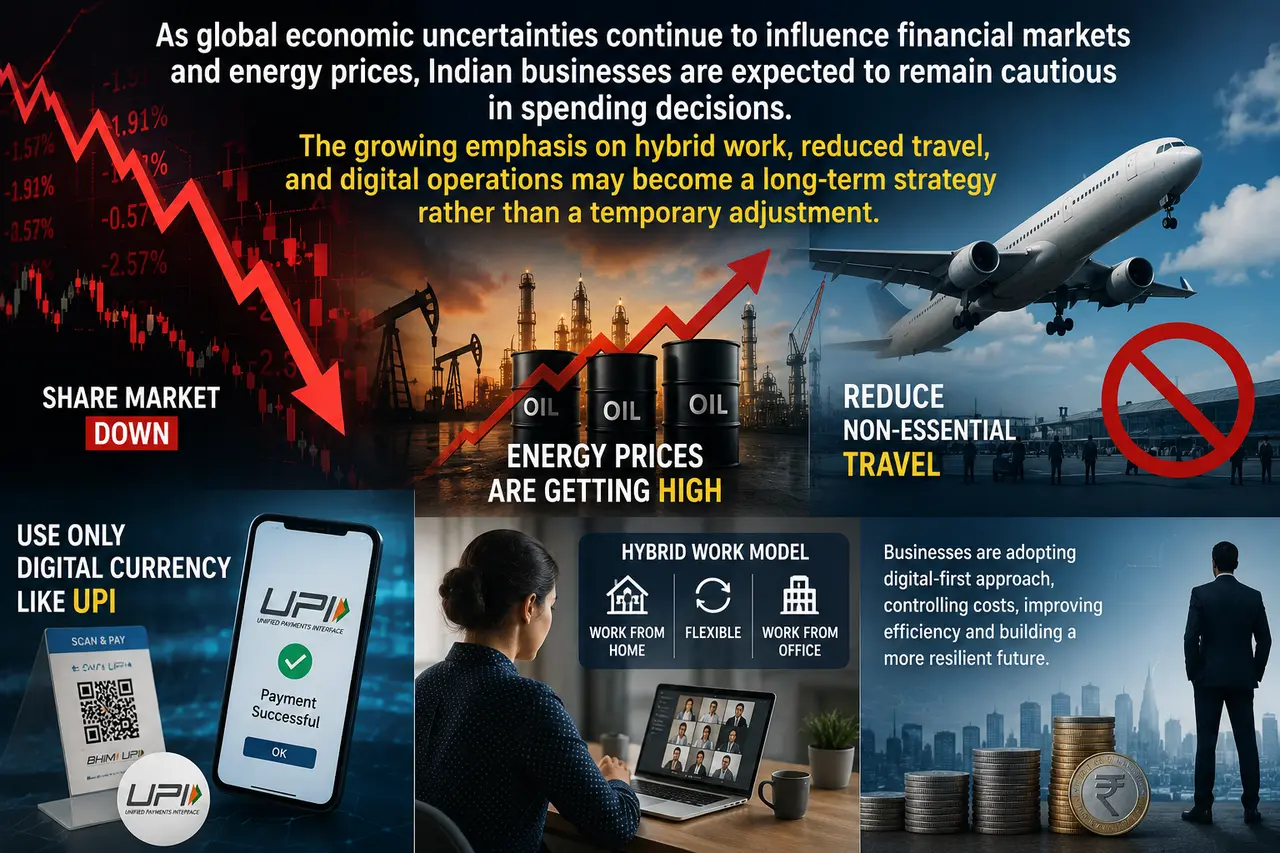
As global economic uncertainties continue to influence financial markets and energy prices, Indian businesses are expected to remain cautious in spending decisions. The growing emphasis on hybrid work, reduced travel, and digital operations may become a long-term strategy rather than a temporary adjustment.
For now, India Inc appears willing to align with the government’s broader economic message while continuing to rely on technology-driven work models that became mainstream over the past few years.