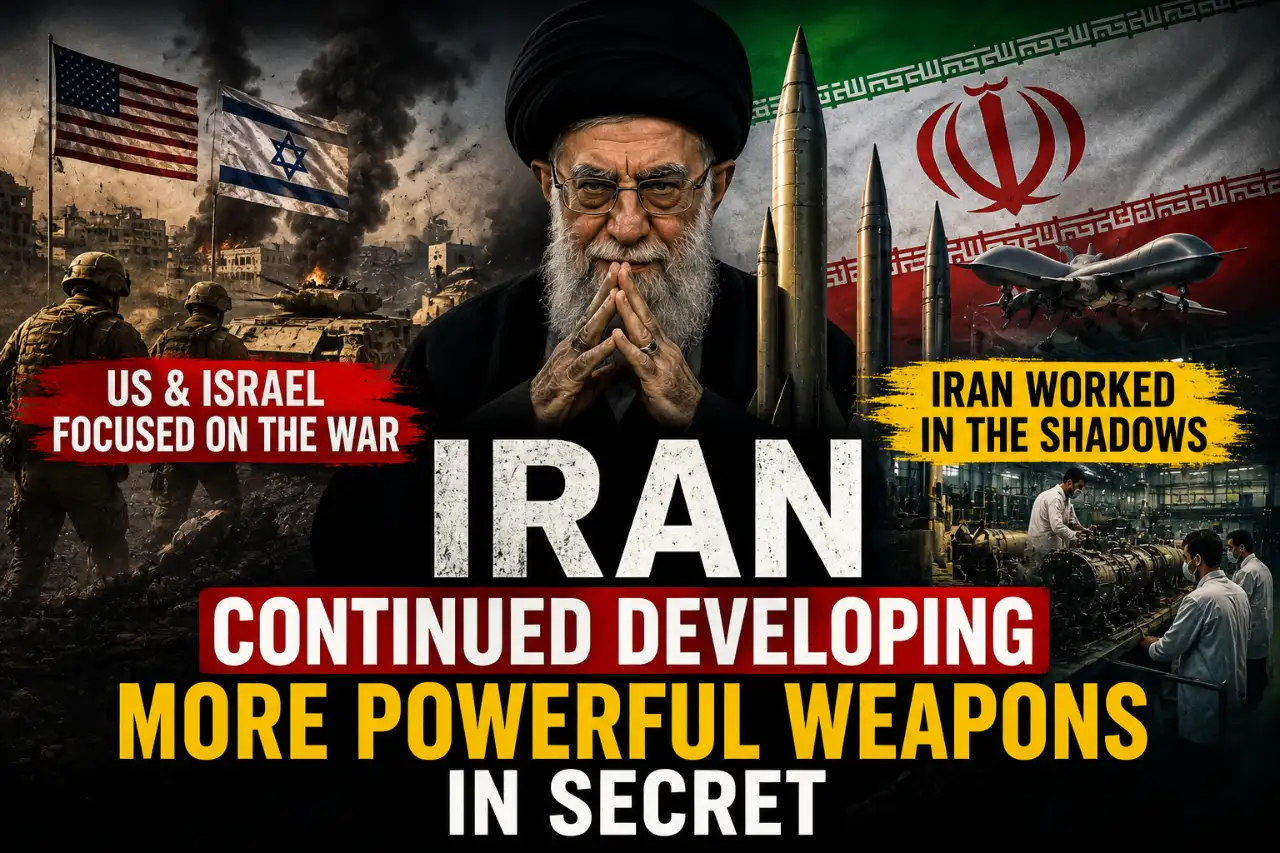
While the US and Israel Were Focused on the War, Iran Reportedly Continued Developing More Powerful Weapons in Secret. (image source: "Chat GPT AI Generated Visuals")
Our Daily Dose of Truth and Trends
While the US and Israel Were Focused on the War, Iran Reportedly Continued Developing More Powerful Weapons in Secret. (image source: "Chat GPT AI Generated Visuals")
Amidst tensions involving Iran, the US, and Israel, Iran has claimed that it utilized this period of confrontation not only to mount a military response but also to enhance its defense systems behind the scenes. According to statements from Iranian military officials, the country accelerated work on new drones and improved missile technology during the conflict.
Iranian military spokesperson Brigadier General Mohammad Akraminia stated that Iranian defense teams continued research and production activities throughout the confrontation rather than halting development. Iran claimed that certain systems undergoing development were inducted into service even before the hostilities had concluded.
Iranian officials stated that new drone systems were deployed during the final phase of the conflict and described them as more advanced than previously known systems. However, independent verification of the precise capabilities of these systems remains limited at this time.
This announcement has drawn widespread attention, as military conflicts often drive nations to accelerate the adoption of new technologies. Experts generally believe that wartime conditions can fast-track the processes of testing, manufacturing, and deploying defense technologies. Iran has repeatedly stated that strengthening domestic military production is a strategic priority, particularly amidst long-standing sanctions and external pressure.
Iran’s defense policy also reflects a broader strategy of maintaining military self-reliance. Iranian officials argue that reliance on external suppliers is risky and that local production provides resilience during times of conflict and sanctions.
These developments come at a time of persistent instability in the region. Recent reports indicate that efforts and negotiations aimed at a truce between Iran and the US remain fragile, while uncertainty persists due to military activities and regional tensions.
Moreover, it is often difficult to immediately and independently verify defense-related claims during periods of geopolitical tension. Public announcements may encompass strategic messaging, military signaling, or long-term policy objectives, in addition to actual battlefield outcomes.
Security experts generally view modern military competition as extending far beyond battlefield activities. Alongside traditional military strength, factors such as research, production, cyber capabilities, logistics, and the ability to adapt rapidly to changing circumstances play a crucial role in determining outcomes. This implies that technological development often continues even during active conflict.
Another significant aspect is the rapid integration of unmanned systems and precision technologies into the current military arms race. Enhancing drones and missiles has become a crucial component of regional defense strategies, as these assets directly influence capabilities regarding deterrence, surveillance, and retaliatory action.
Whether Iran’s recent claims signify a major technological breakthrough or merely an incremental upgrade program will only become clear as more information emerges over time. For now, this announcement highlights that the regional military arms race persists even amidst ongoing diplomatic efforts and ceasefire negotiations.