
US Tech Firms May Use China as a Strategic ‘Listening Post’ to Stay Globally Competitive
Our Daily Dose of Truth and Trends
US Tech Firms May Use China as a Strategic ‘Listening Post’ to Stay Globally Competitive
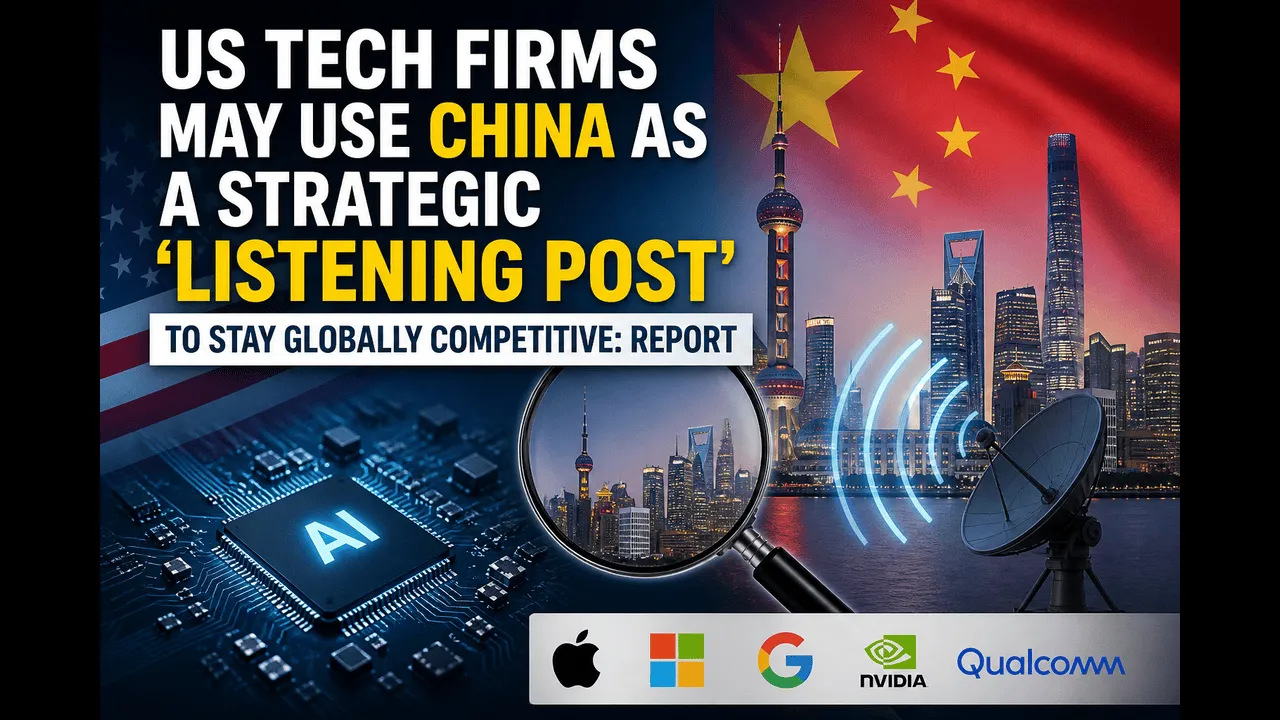
A new report from a Washington-based think tank has stirred discussion about what lies ahead for American tech companies operating in China. At a time when relations between the two countries remain tense, the study suggests that a complete withdrawal from China may not be the wisest strategy for US firms looking to stay competitive on the global stage.
The report argues that maintaining a presence in China could actually work in favor of American companies. Rather than treating China only as a competitor, it can also be seen as a strategic vantage point — a place where companies can closely monitor global developments, industry shifts, and emerging competition.
The reasoning is fairly straightforward. By continuing operations in China, US firms remain connected to one of the largest and fastest-changing tech markets in the world. This allows them to keep a close eye on evolving consumer trends, new technologies, and business strategies as they unfold in real time.
There are also clear financial benefits. Profits earned from the Chinese market can be funneled back into research and development in the United States. This reinvestment helps fuel innovation and keeps American companies at the forefront of technological progress.
At the same time, the think tank cautions against forcing companies to exit China altogether. Doing so could end up benefiting local Chinese firms, giving them more room to expand while weakening the global standing of US businesses.
Another advantage highlighted in the report is what experts describe as a “reverse flow” of knowledge. In simple terms, the experience and insights gained from operating in China can be brought back to the US, helping companies refine their strategies and improve innovation.
Still, this approach is not without its challenges. Critics point to concerns around national security, protection of intellectual property, and broader political risks tied to operating in China. These issues continue to fuel an ongoing debate between economic opportunity and strategic caution.
Even so, the report calls for a balanced approach. Instead of pulling out completely, companies are encouraged to carefully manage risks while continuing to benefit from their presence in a key global market.
This conversation comes at a time when the US and China are competing heavily in critical sectors such as artificial intelligence, semiconductor technology, and advanced manufacturing. Keeping a close watch on developments in China could offer US firms a valuable advantage in this competitive landscape.
Many experts believe that China’s rapid pace of innovation and sheer market size make it too important to ignore. Stepping away entirely could mean losing access to insights that play a major role in shaping the future of technology worldwide.
In the end, the report takes a practical stance: rather than cutting ties, US tech companies should use their operations in China wisely. By doing so, they can strengthen their global position while continuing to drive innovation back home.