US Supreme Court Birthright Citizenship Ruling Brings Major Relief for Indians
Our Daily Dose of Truth and Trends
US Supreme Court Birthright Citizenship Ruling Brings Major Relief for Indians
A major US Supreme Court ruling has brought relief to thousands of Indian families living and working in the United States. In a significant decision, the Court rejected attempts to curtail birthright citizenship and reaffirmed that children born on US soil will continue to automatically acquire US citizenship under the Constitution. This ruling is considered particularly important for Indian professionals working on H-1B and other temporary visas.
The decision follows a legal challenge to an executive order that sought to limit automatic citizenship for children born in the US to parents who were temporary residents or undocumented immigrants. The Supreme Court ruled that such restrictions run counter to the long-standing interpretation of the Constitution under the 14th Amendment.
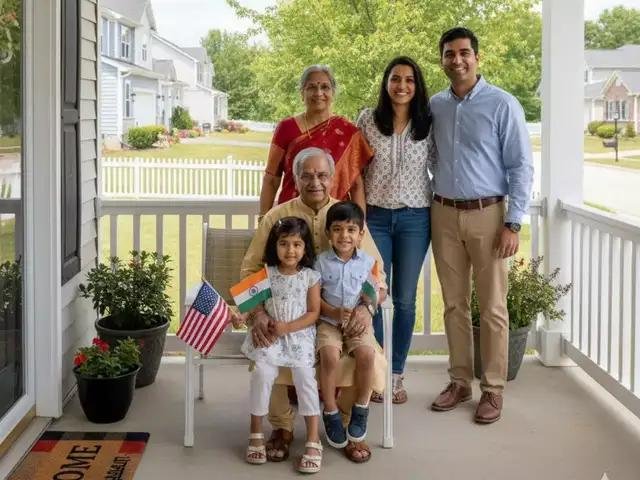
This decision holds significant practical importance for Indian families. India is among the countries with the largest populations of H-1B visa holders in the U.S., and many families have been waiting for years for employment-based green cards due to immigration backlogs. Under the court’s ruling, the U.S.-born children of these families will continue to retain their right to citizenship.
The system of birthright citizenship in the United States has been in place for generations and is based on the ‘Citizenship Clause’ of the 14th Amendment. Under this provision, any person born in the country is considered a citizen, regardless of their parents’ immigration status; however, this rule does not apply in certain specific situations, such as diplomatic exceptions. Court rulings have upheld this interpretation.
This decision holds significant practical importance for Indian families. India is among the countries with the largest populations of H-1B visa holders in the U.S., and many families have been waiting for years for employment-based green cards due to immigration backlogs. Under the court’s ruling, the U.S.-born children of these families will continue to retain their right to citizenship.
The system of birthright citizenship in the United States has been in place for generations and is based on the ‘Citizenship Clause’ of the 14th Amendment. Under this provision, any person born in the country is considered a citizen, regardless of their parents’ immigration status; however, this rule does not apply in certain specific situations, such as diplomatic exceptions. Court rulings have upheld this interpretation.
Immigration experts say this decision has eliminated a major source of uncertainty for families planning long-term careers and education in the US. Many Indian parents were concerned about whether their US-born children would face legal complications had the executive order remained in effect.
This decision may also alleviate concerns for multinational companies that employ foreign professionals. The US technology, engineering, healthcare, and finance sectors rely heavily on skilled workers, including thousands of Indians working on employment visas.
While this decision provides clarity regarding citizenship, immigration experts say it does not resolve major issues such as visa backlogs, Green Card waiting times, or future immigration reforms. These matters remain the subject of separate policy and legal discussions.
The decision drew mixed political reactions in the United States. Supporters hailed it as a defense of constitutional values and legal continuity, while critics argued that changes to immigration laws might require action through Congress rather than executive action.
Legal experts believe this ruling could be one of the most significant immigration-related decisions in recent years, as it reinforces the principle that has shaped U.S. citizenship policy for over a century.
The clear message for Indian families currently living in the U.S. is that children born there will retain their birthright citizenship. This brings stability at a time when the debate over immigration is ongoing across the country.