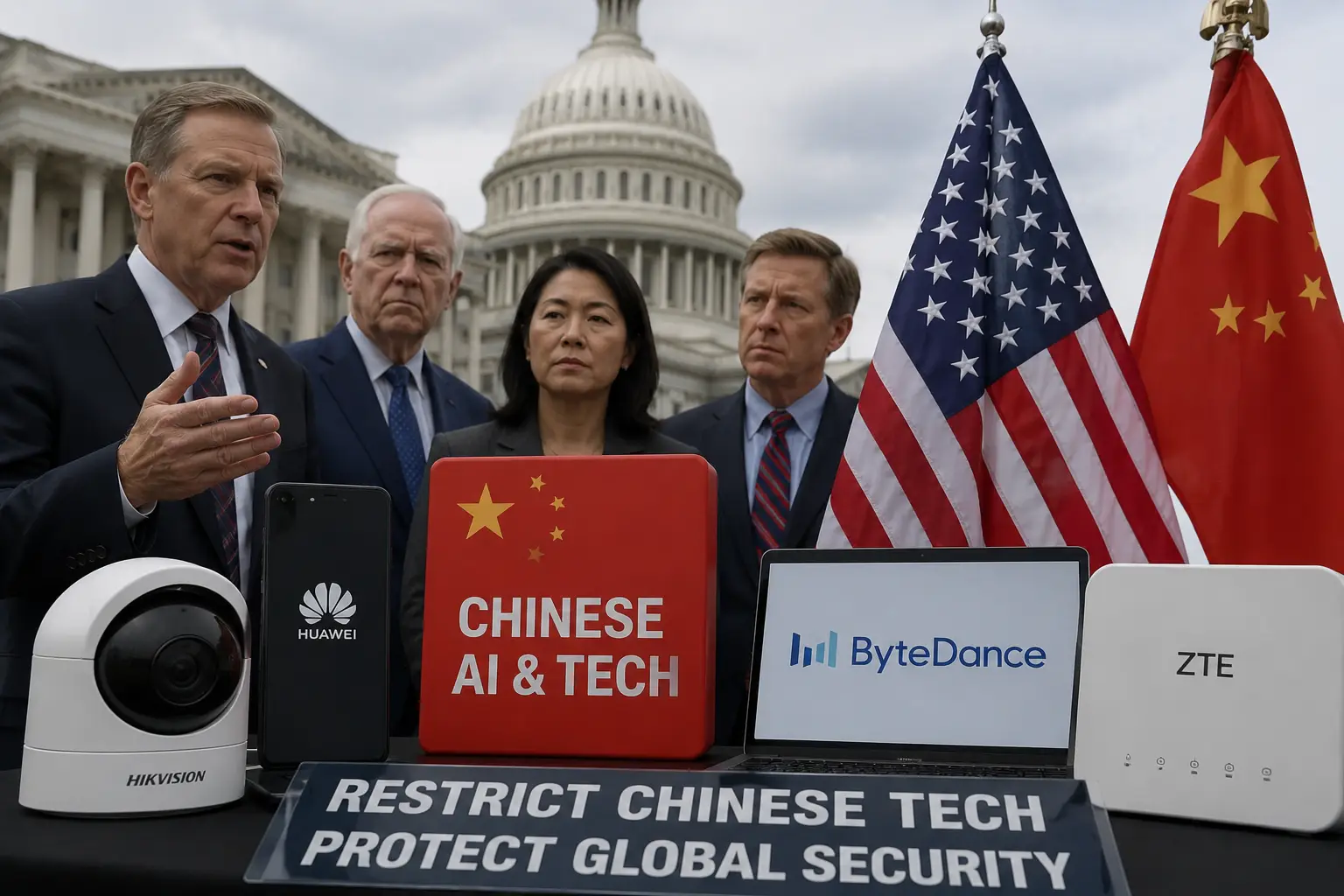
US Lawmakers Move to Curb Global Expansion of Chinese AI and Technology Products Abroad (image source: Chat GPT , "AI Visuals")
Our Daily Dose of Truth and Trends
US Lawmakers Move to Curb Global Expansion of Chinese AI and Technology Products Abroad (image source: Chat GPT , "AI Visuals")
The United States is intensifying its efforts to limit the global reach of Chinese artificial intelligence and technology companies, as concerns regarding national security, data privacy, and geopolitical influence continue to mount. U.S. lawmakers are now calling for even stricter controls on the export, usage, and international adoption of AI systems and advanced technology products manufactured in China.
According to reports, many members of the U.S. Congress believe that if Chinese technology companies deeply integrate their products into global infrastructure, they could pose long-term security risks. These concerns encompass surveillance technologies, artificial intelligence tools, telecommunications equipment, cloud services, and advanced semiconductor systems.
This latest move comes amidst escalating tensions between the United States and China over dominance in the technology sector. Over the past few years, Washington has already imposed restrictions on several Chinese companies; these include the telecom giant Huawei and other firms accused of maintaining close ties with the Chinese government.
Lawmakers argue that AI technology is emerging as one of the most powerful strategic tools in the modern world. From facial recognition systems and cybersecurity platforms to military applications and advanced data analytics, artificial intelligence is now considered critical to global economic and national security competition.
According to reports, the United States fears that the widespread deployment of Chinese AI systems in other countries could bolster Beijing’s influence over global digital infrastructure. Some U.S. officials believe that this could provide China with an opportunity to expand its technological and political power on the international stage.
Many U.S. officials are also concerned about the data security and privacy risks associated with technology developed in other nations. They argue that foreign governments could gain access to—or exert influence over—sensitive information collected through smartphones, cloud platforms, surveillance cameras, and AI systems.
However, China has repeatedly denied allegations that its technology companies pose a security threat. Chinese officials argue that the United States, rather than engaging in fair market competition, is attempting to slow down China’s technological rise by employing political pressure and trade restrictions.
The escalating technological rivalry between Washington and Beijing is already impacting global supply chains and international business decisions. Consequently, many nations are now compelled to strike a delicate balance between economic opportunities and security concerns when selecting technology partners.
Experts believe that the ongoing race involving AI and advanced technology could shape the future of the global economy for decades to come. Artificial Intelligence (AI) is expected to play a pivotal role across various industries, such as healthcare, finance, transportation, defense, manufacturing, and communication systems.
Meanwhile, American technology companies are also investing billions of dollars in AI development to maintain their competitive edge. To counter intensifying international competition, the U.S. government has further sharpened its focus on bolstering domestic semiconductor manufacturing, AI research, and cybersecurity infrastructure.
This ongoing dispute could also impact developing nations that rely on affordable Chinese technology products and infrastructure projects. Many countries across Asia, Africa, and the Middle East have already partnered with Chinese companies for telecom expansion, smart city projects, and digital transformation initiatives.
As the geopolitical rivalry between the United States and China intensifies, the global AI industry is emerging as one of the modern era’s most significant battlegrounds. The decisions governments make today regarding technology partnerships, regulations, and security could profoundly shape the future balance of global economic and political power.