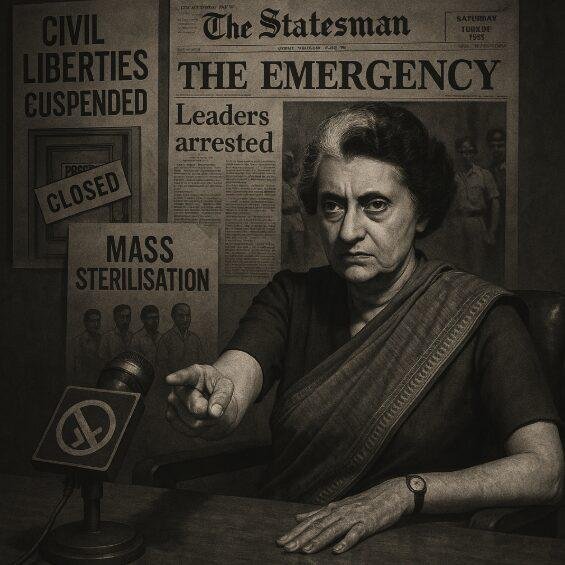
PM Modi Describes the Emergency Period as a Dark Chapter That Severely Undermined Indian Democracy (image source: "Chat GPT AI Generated Visuals")
Our Daily Dose of Truth and Trends
PM Modi Describes the Emergency Period as a Dark Chapter That Severely Undermined Indian Democracy (image source: "Chat GPT AI Generated Visuals")
On the anniversary of the Emergency imposed in 1975, Prime Minister Narendra Modi described that period as one of the darkest chapters in India’s democratic history. He stated that the Emergency was a direct assault on constitutional values and democratic institutions.
The Emergency was declared in India on June 25, 1975, under the government led by Indira Gandhi, and it remained in force until March 1977. During this period, extraordinary constitutional powers were invoked, impacting political activities, civil liberties, and the governance system across the country.
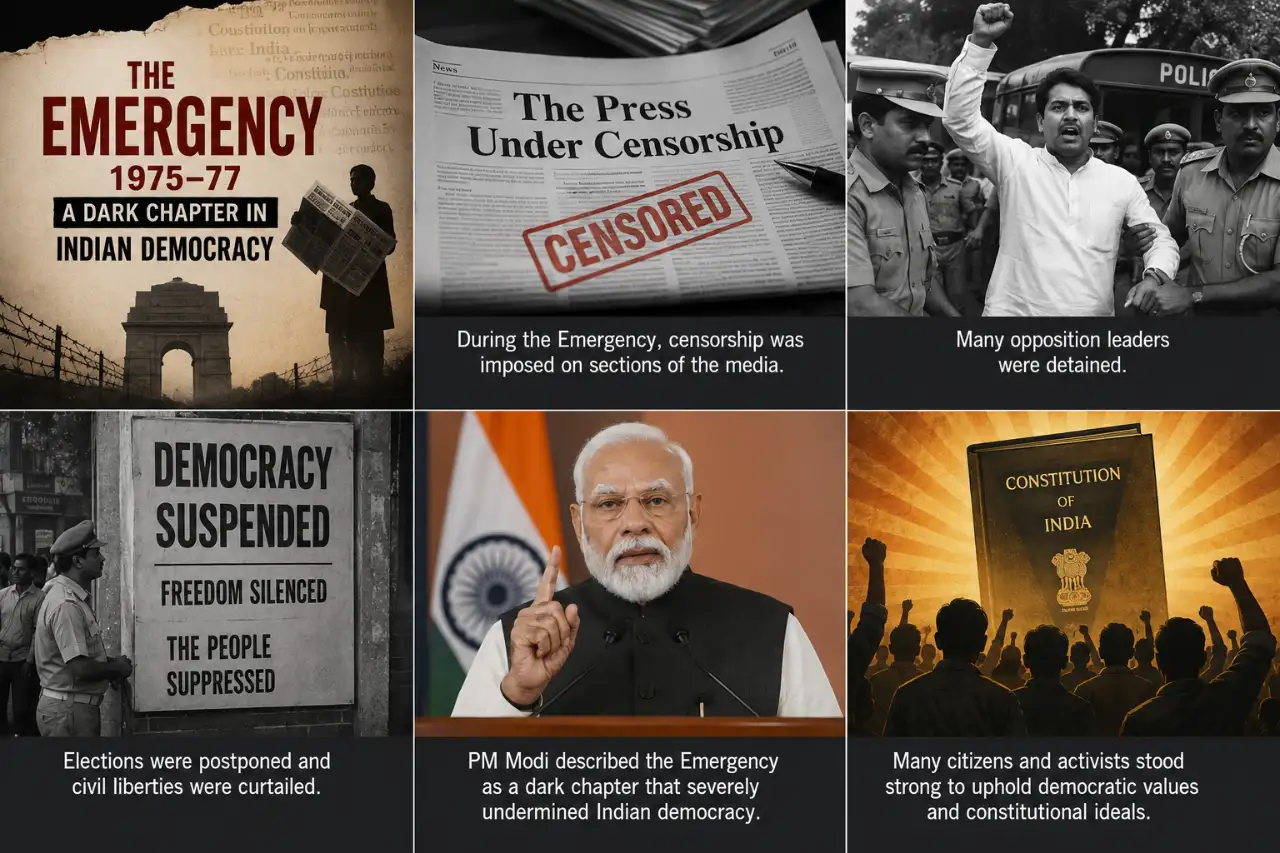
In his statement, PM Modi said that during the Emergency, civil rights were suspended, freedom of expression was curtailed, political leaders, journalists, and social activists were arrested, and pressure was exerted on institutions vital to the functioning of democracy.
The Prime Minister made these remarks during events marking ‘Samvidhan Hatya Diwas’ (Constitution Murder Day). This day has been instituted to commemorate the Emergency era and to foster public discourse on constitutional values and democratic safeguards.
During the Emergency, elections were postponed, censorship was imposed on sections of the media, and many opposition leaders were detained. Historians and political analysts continue to study this period today because of its enduring impact on Indian politics and institutional development.
Prime Minister Modi also noted that despite the institutional pressure of that era, many citizens and activists continued to uphold democratic values and constitutional ideals. He described this resistance as a significant part of India’s democratic history.
Those who support the government’s stance argue that it is essential to remember the Emergency, as it highlights the importance of civil liberties, constitutional limits, and institutional independence. Leaders of the ruling party have also described this period as a reminder of the significance of democratic accountability.
At the same time, political debate regarding the Emergency continues in India, with various parties interpreting its causes, consequences, and historical lessons in different ways. Even today, this period is frequently referenced in contemporary political discourse and public debates.
Researchers studying democratic systems often examine periods marked by the expansion of executive powers to understand their long-term impact on institutions, political trust, and public participation. Studies on the Emergency in India have consistently contributed to broader discussions regarding democracy and constitutional governance.
As India marked another anniversary of the Emergency, the discourse once again drew attention to the balance between state authority and constitutional safeguards, as well as the role of institutions in upholding democratic values for future generations.