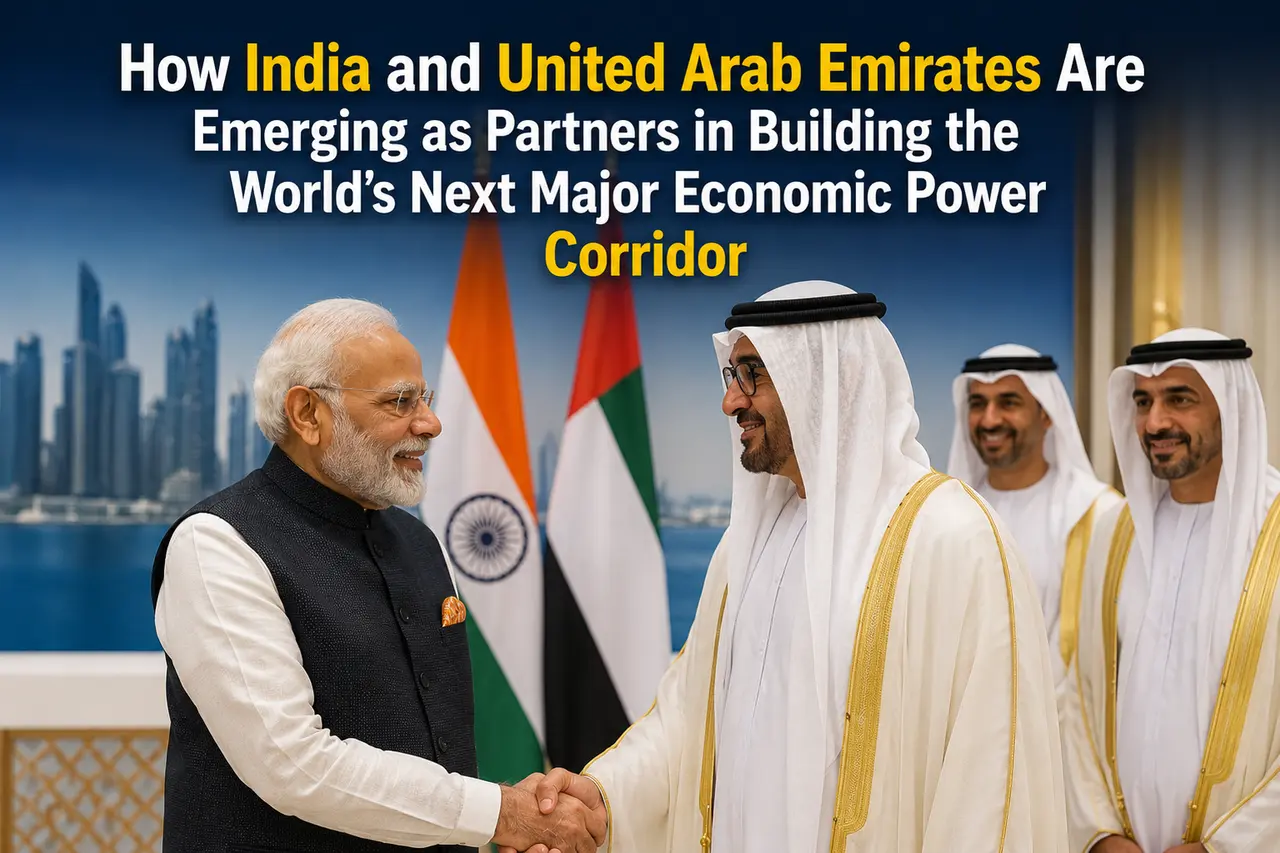
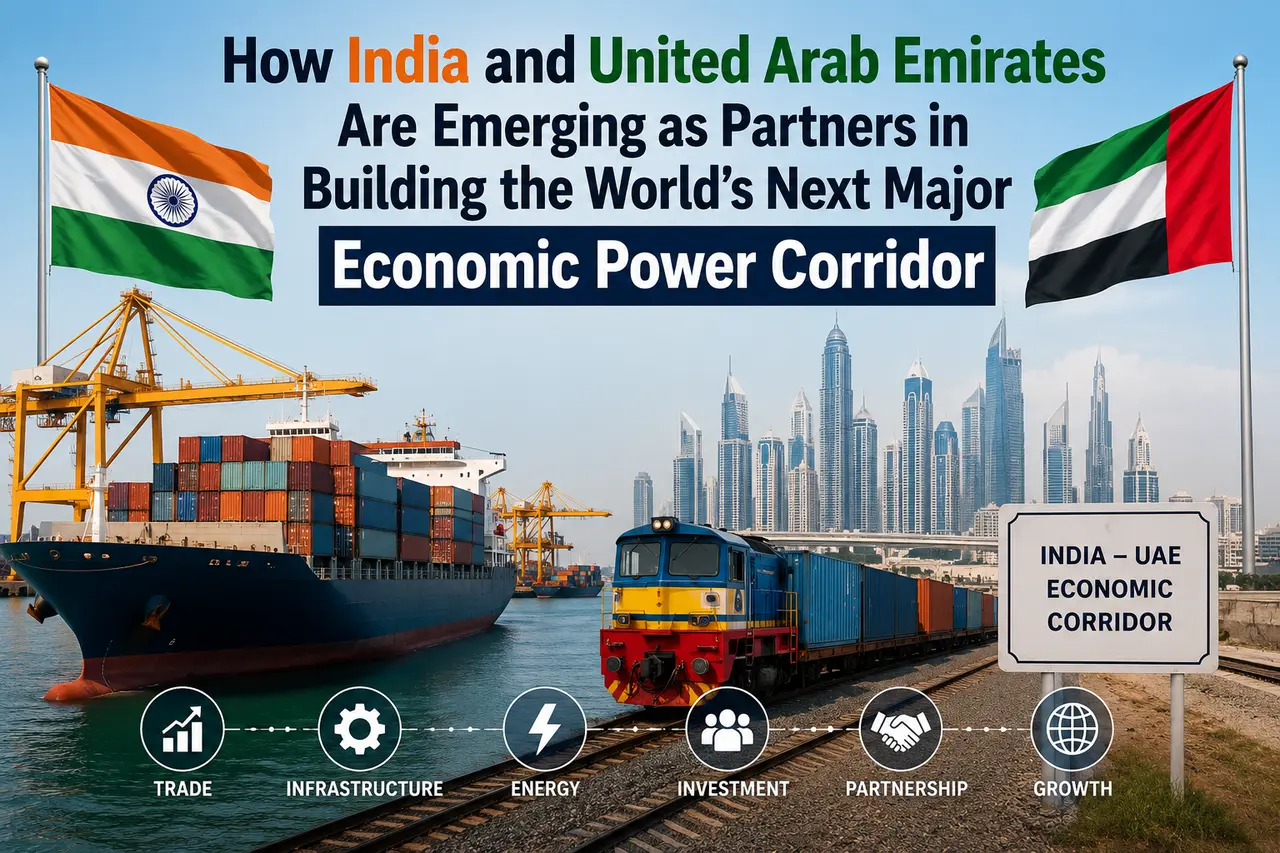
How India and United Arab Emirates Are Emerging as Partners in Building the World’s Next Major Economic Power Corridor
Our Daily Dose of Truth and Trends
How India and United Arab Emirates Are Emerging as Partners in Building the World’s Next Major Economic Power Corridor
The Middle East has rarely felt so unstable. Gaza is awash in blood. Houthi drones hover over shipping lanes in the Red Sea. The Strait of Hormuz—the narrow passage through which one-fifth of the world’s oil flows daily—remains perpetually on the brink of tension, held hostage by the simmering conflict between Iran and the US-Israel alliance.
Oil prices are experiencing massive volatility. Container shipping routes are being rerouted. And the geopolitical landscape of West Asia—reshaped by the Arab Spring and the Abraham Accords—is once again undergoing transformation under the pressure of the current conflict.
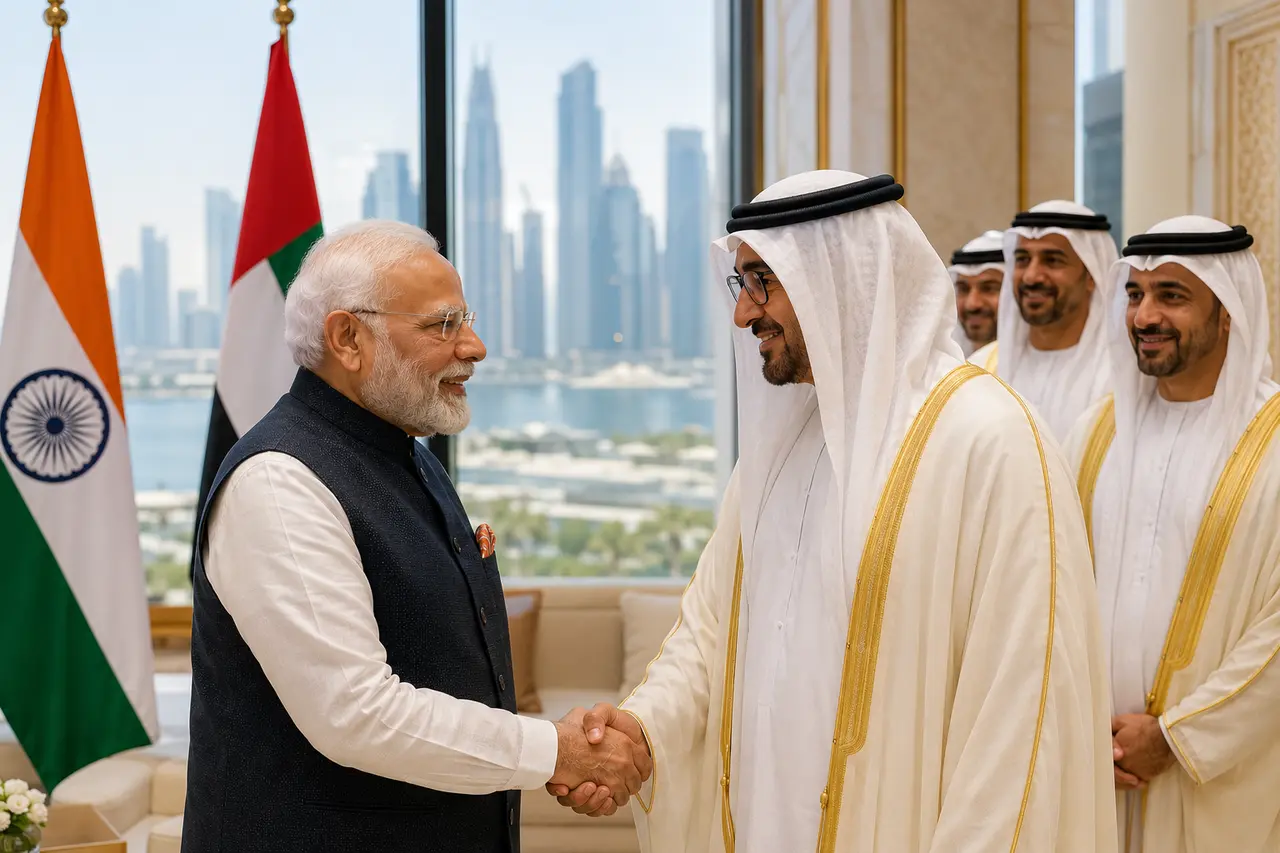
Amidst these volatile circumstances, Prime Minister Narendra Modi arrived in the United Arab Emirates; and what he is undertaking there is, by no means, ordinary diplomacy. For the better part of the last half-century, India’s relationship with the Gulf nations has essentially been a ‘transaction of convenience’: crude oil, remittances, and the millions of Indian workers who shuttled between these two worlds.
That deal served both parties well. However, it was never a strategy. Today, India and the UAE are crafting precisely that—a strategic corridor encompassing energy, defense, maritime industries, sovereign capital, and artificial intelligence—designed to bolster both nations during uncertain times.
The foundation of these developmental initiatives is the ‘Comprehensive Economic Partnership Agreement,’ which has already been signed between the two nations. This agreement has propelled bilateral trade to record levels and established the commercial framework within which an even deeper strategic partnership is currently taking shape.
Let us begin with oil, for in this sector, everything ultimately begins with oil. India is the world’s third-largest consumer of crude oil, importing approximately 90 percent of its consumption. Half of these imports originate from Saudi Arabia, Iraq, and the UAE—and all of this oil passes through the ‘Strait of Hormuz.’ This single ‘chokepoint’ constitutes the daily reality upon which the Indian economy currently rests.
One of the biggest driving forces behind this partnership is trade. The UAE has become one of India’s largest trading partners, while India remains among the UAE’s most important economic allies. The Comprehensive Economic Partnership Agreement (CEPA) signed between the two countries has significantly boosted bilateral trade, reduced tariffs, and encouraged faster business growth across multiple industries.
Infrastructure and logistics are also playing a major role in strengthening ties between the two nations. UAE-based companies are investing heavily in Indian ports, transport systems, industrial zones, and logistics hubs. At the same time, India is expanding its shipping and trade connectivity with the Gulf region to improve global supply chain access and reduce transportation costs.
Energy cooperation has become another major pillar of the relationship. The UAE continues to remain one of India’s key suppliers of crude oil and energy resources, while both countries are now increasing collaboration in renewable energy, green hydrogen, and sustainable infrastructure projects. This partnership is expected to become even more important as countries move toward cleaner energy solutions.
Technology and digital transformation are also bringing the two nations closer. Indian IT companies and startups are expanding operations in Dubai and Abu Dhabi, while UAE investors are showing growing interest in India’s rapidly developing digital economy. Areas such as artificial intelligence, fintech, cybersecurity, smart cities, and digital payments are opening new business opportunities for both sides.
Apart from economics, the strong people-to-people connection between India and the UAE continues to strengthen bilateral relations. Millions of Indians live and work in the UAE, contributing significantly to sectors like construction, healthcare, technology, finance, and hospitality. Their presence has helped build deep cultural and economic ties between the two countries.
Experts believe the India-UAE partnership could eventually become one of the world’s most influential economic corridors, connecting Asian manufacturing strength with Middle Eastern investment power and global trade routes. As both nations continue expanding cooperation across strategic sectors, their alliance is expected to play a major role in shaping future global trade and economic growth.