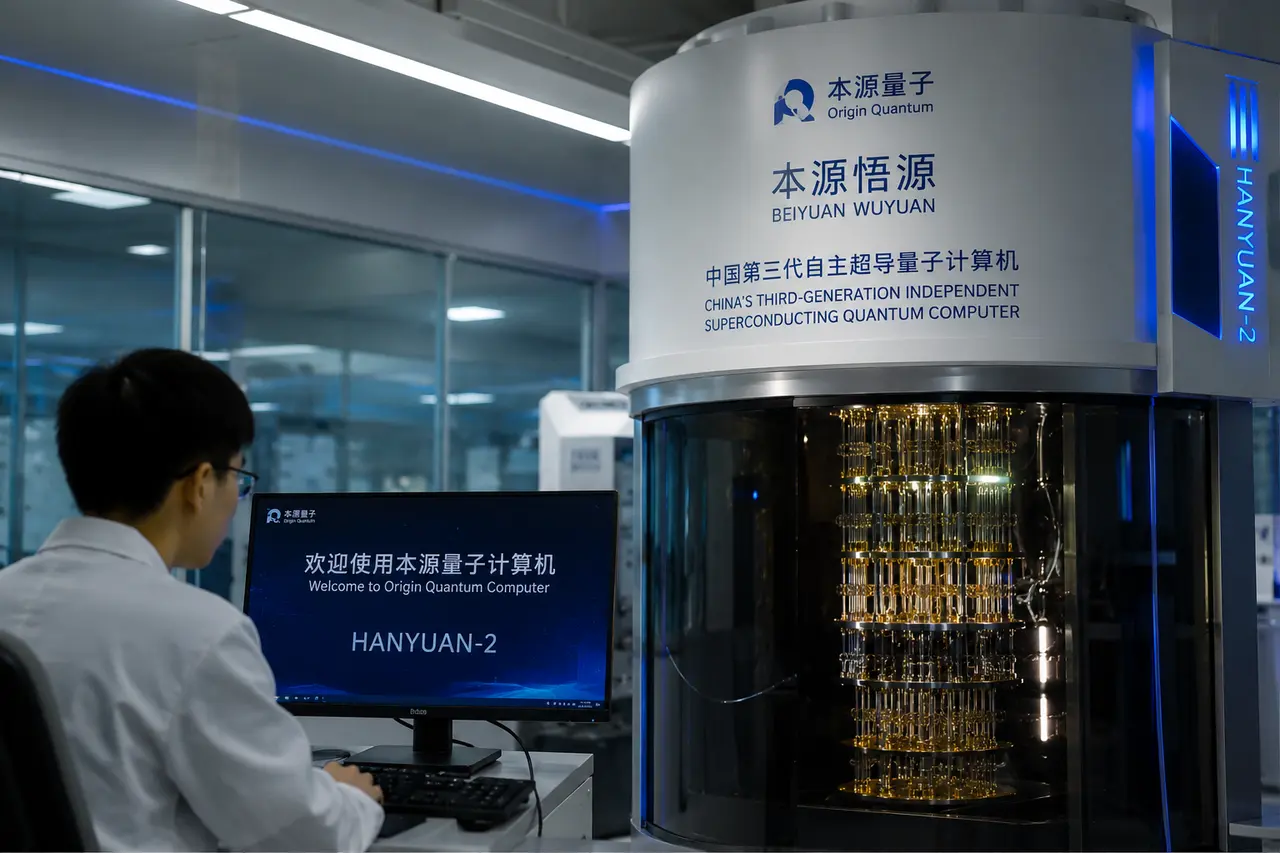
China Introduces World’s First Dual-Core Atomic Quantum Computer Hanyuan-2 (image Source: Chat GPT, "AI Generated Visuals")
Our Daily Dose of Truth and Trends
China Introduces World’s First Dual-Core Atomic Quantum Computer Hanyuan-2 (image Source: Chat GPT, "AI Generated Visuals")
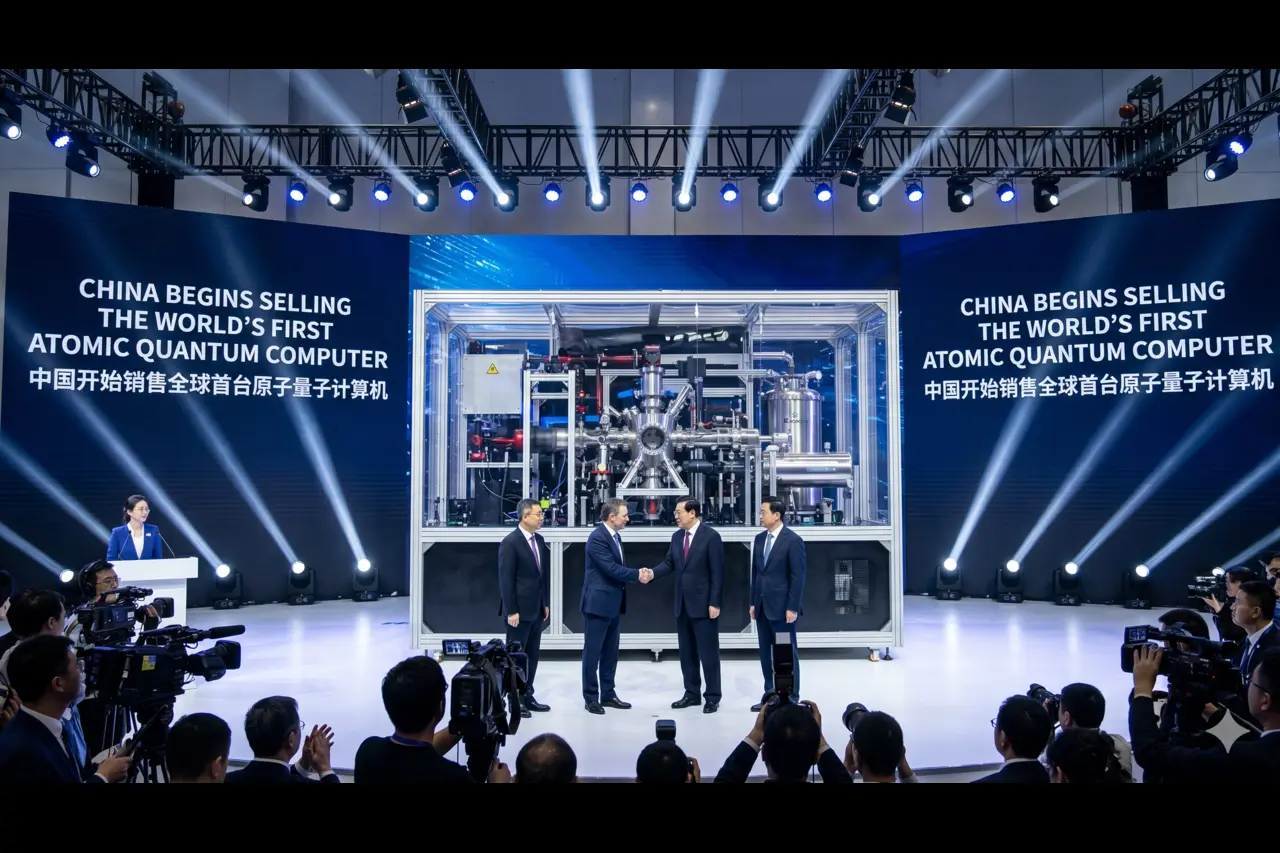
China has reportedly unveiled the world’s first dual-core atomic quantum computer, named “Hanyuan-2,” in what experts are calling a major breakthrough in the global race for next-generation computing technology. The development is being viewed as another significant step in China’s growing ambition to become a global leader in advanced scientific innovation and quantum research.
Quantum computing has long been considered one of the most powerful future technologies because of its ability to process highly complex calculations at speeds impossible for traditional computers. Unlike ordinary computers that rely on binary bits, quantum systems use quantum bits, or qubits, allowing them to perform multiple calculations simultaneously.
According to researchers involved in the project, Hanyuan-2 introduces a dual-core atomic architecture designed to improve operational stability, efficiency, and computing accuracy. One of the biggest challenges in quantum computing has been maintaining stable qubits without interference from external conditions. Scientists believe the new design could help reduce those technical limitations.
The announcement has attracted attention from technology experts worldwide because stable and scalable quantum computers could transform industries ranging from healthcare and finance to cybersecurity and artificial intelligence. Quantum machines are expected to solve problems that would take today’s supercomputers years or even decades to process.
Chinese researchers reportedly stated that the dual-core structure allows better coordination between computing units while improving fault tolerance. In simpler terms, the system may be able to perform calculations more reliably without errors disrupting the computing process.
Experts say this advancement could also strengthen China’s position in the increasingly competitive global technology race involving countries like the United States, Japan, and several European nations that are heavily investing in quantum research and semiconductor innovation.
Quantum computing is often described as the next frontier of digital technology because of its potential to revolutionise scientific simulations, weather forecasting, drug discovery, logistics planning, and encryption systems. Governments and private companies worldwide are spending billions of dollars to gain an advantage in the sector.
Industry analysts believe that breakthroughs like Hanyuan-2 could eventually accelerate the commercialisation of quantum technologies. While most quantum computers today remain experimental and limited to research environments, improvements in stability and efficiency may gradually bring them closer to practical real-world applications.
The unveiling of Hanyuan-2 also highlights China’s continued focus on scientific self-reliance and technological independence. Over the past few years, the country has significantly expanded investments in advanced computing, semiconductor manufacturing, artificial intelligence, and space technology.
Some experts caution, however, that practical quantum computing at a large scale is still years away. Despite impressive breakthroughs, scientists globally continue to face major challenges related to hardware stability, cooling systems, qubit reliability, and high operational costs.
Nevertheless, the progress demonstrated by Hanyuan-2 is being viewed as an important milestone in the evolution of quantum systems. Researchers believe each improvement in design and stability brings the industry one step closer to unlocking the true potential of quantum computing.
Technology companies and governments around the world are expected to closely monitor China’s latest development. As the race for quantum supremacy intensifies, breakthroughs like Hanyuan-2 may shape the future balance of technological and economic power globally.
For now, Hanyuan-2 stands as a symbol of how rapidly quantum research is advancing and how nations are increasingly competing to dominate the technologies that could define the future digital era.