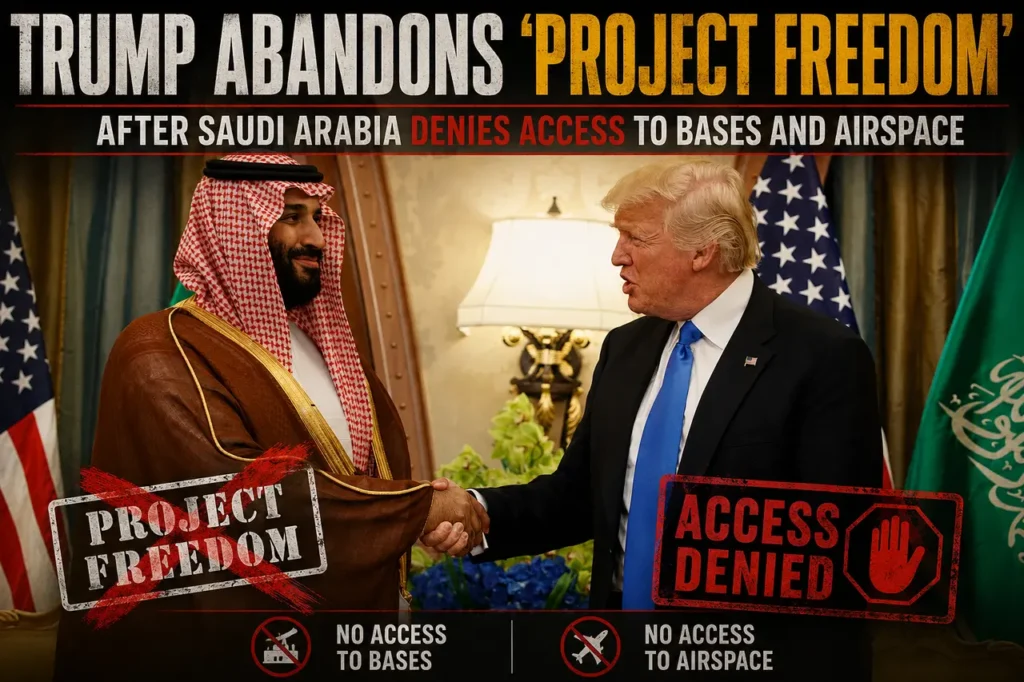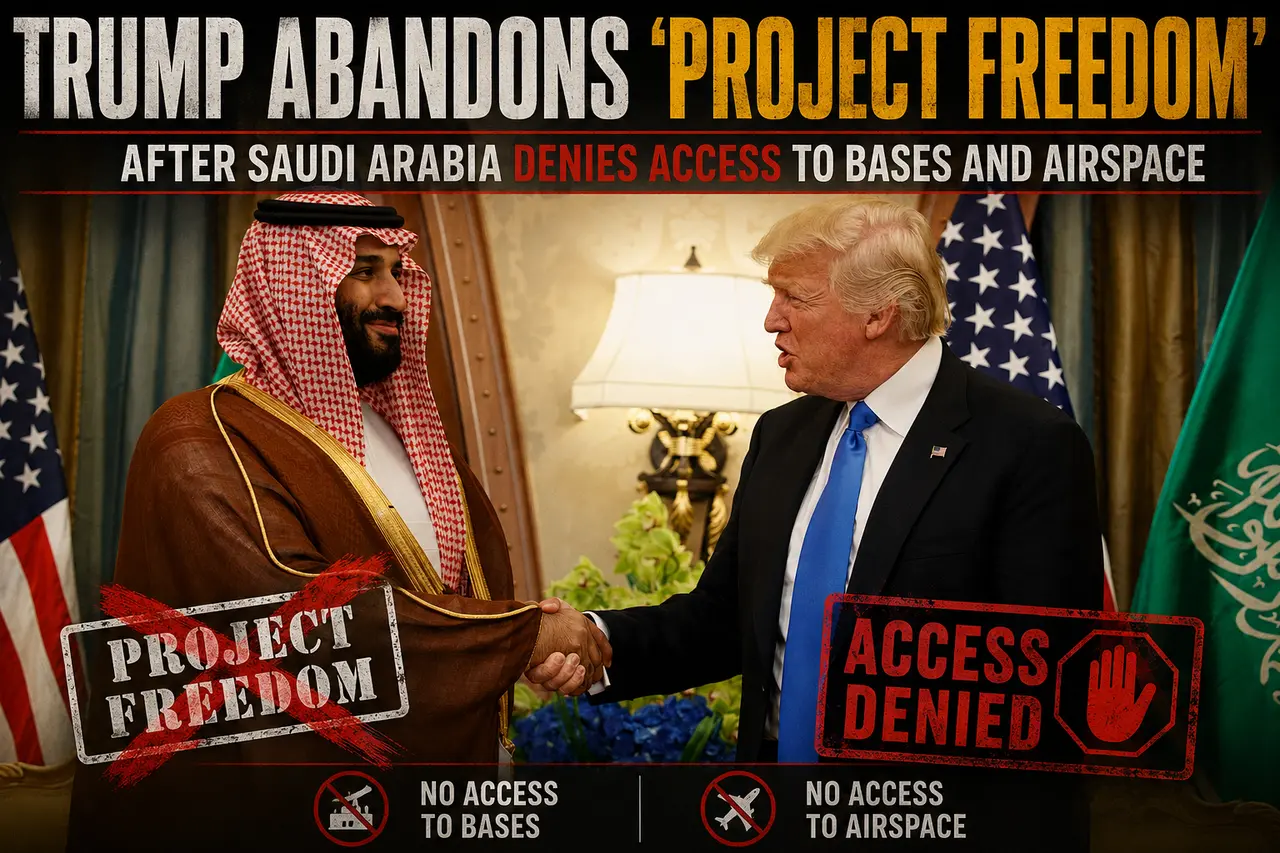
Trump Reportedly Dropped ‘Project Freedom’ (image source: Chat GPT "AI Generated Visuals")
Our Daily Dose of Truth and Trends
Trump Reportedly Dropped ‘Project Freedom’ (image source: Chat GPT "AI Generated Visuals")
A fresh report surrounding former US President Donald Trump and a proposed strategic initiative called “Project Freedom” has sparked discussion in global political and defence circles. According to reports, the project was eventually shelved after Saudi Arabia allegedly refused to allow the use of its military bases and airspace for the operation.
The development highlights how deeply dependent large-scale geopolitical and military strategies are on international alliances and regional cooperation. While details about “Project Freedom” remain limited, reports suggest it was expected to involve significant military and strategic coordination in the Middle East.
Saudi Arabia’s reported refusal is being viewed by analysts as a major diplomatic setback for the initiative. The kingdom has long been considered one of Washington’s key partners in the region, especially in matters related to defence, energy, and regional security. However, this incident appears to show that Riyadh is increasingly willing to make independent strategic decisions based on its own national interests.
Experts say the decision may reflect Saudi Arabia’s changing foreign policy approach in recent years. The country has been attempting to balance its relationships with global powers more carefully, including maintaining ties with the United States while also strengthening engagement with nations like China and Russia.
The reported denial of access to bases and airspace may also indicate concerns about regional escalation. Middle Eastern nations have become increasingly cautious about being directly involved in conflicts or military actions that could destabilise the region further.
Observers believe the situation demonstrates the growing complexity of America’s influence in the Middle East. Although the United States continues to maintain a strong military and diplomatic presence in the region, allies are no longer automatically aligning with every strategic move proposed by Washington.
For Trump, the shelving of “Project Freedom” reportedly marked a significant strategic obstacle. Access to regional airspace and military facilities is often essential for executing any large-scale operation in the Middle East. Without support from key allies like Saudi Arabia, carrying out such plans becomes extremely difficult.
Political analysts also point out that Saudi Arabia’s stance could have been influenced by broader economic and diplomatic calculations. The kingdom has been focusing heavily on long-term economic reforms and stability under its Vision 2030 strategy, making it more cautious about actions that could trigger regional uncertainty.
The reports have also reignited debate over the evolving nature of US-Saudi relations. While the two countries continue to share strong economic and security ties, there have been visible differences on several geopolitical issues in recent years.
At the same time, some experts caution that many details surrounding “Project Freedom” remain unclear and unverified publicly. As a result, discussions around the initiative are currently based largely on political reporting and insider accounts rather than official confirmation.
The story nevertheless sheds light on how global diplomacy often shapes military and strategic decisions behind the scenes. Even powerful nations require cooperation from allies to move forward with sensitive operations, especially in politically fragile regions like the Middle East.
In the end, the reported collapse of “Project Freedom” appears to underline a larger shift in global geopolitics — one where regional powers are asserting greater independence, alliances are becoming more transactional, and strategic decisions are increasingly influenced by economic and political balancing rather than automatic loyalty.