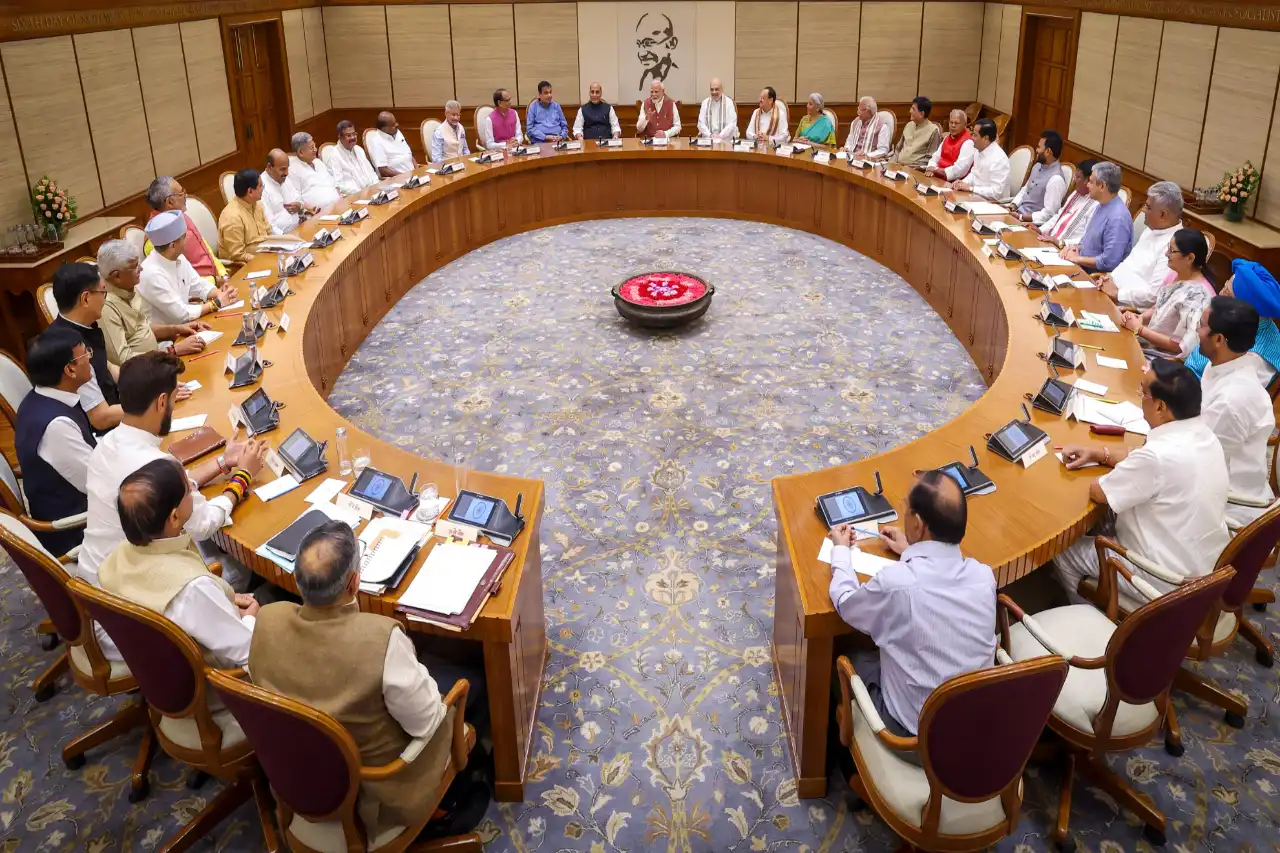
New council of ministers - 11 are 12th pass, 57 are graduate or above (image source: "Chat GPT AI Generated Visuals")
Our Daily Dose of Truth and Trends
New council of ministers - 11 are 12th pass, 57 are graduate or above (image source: "Chat GPT AI Generated Visuals")
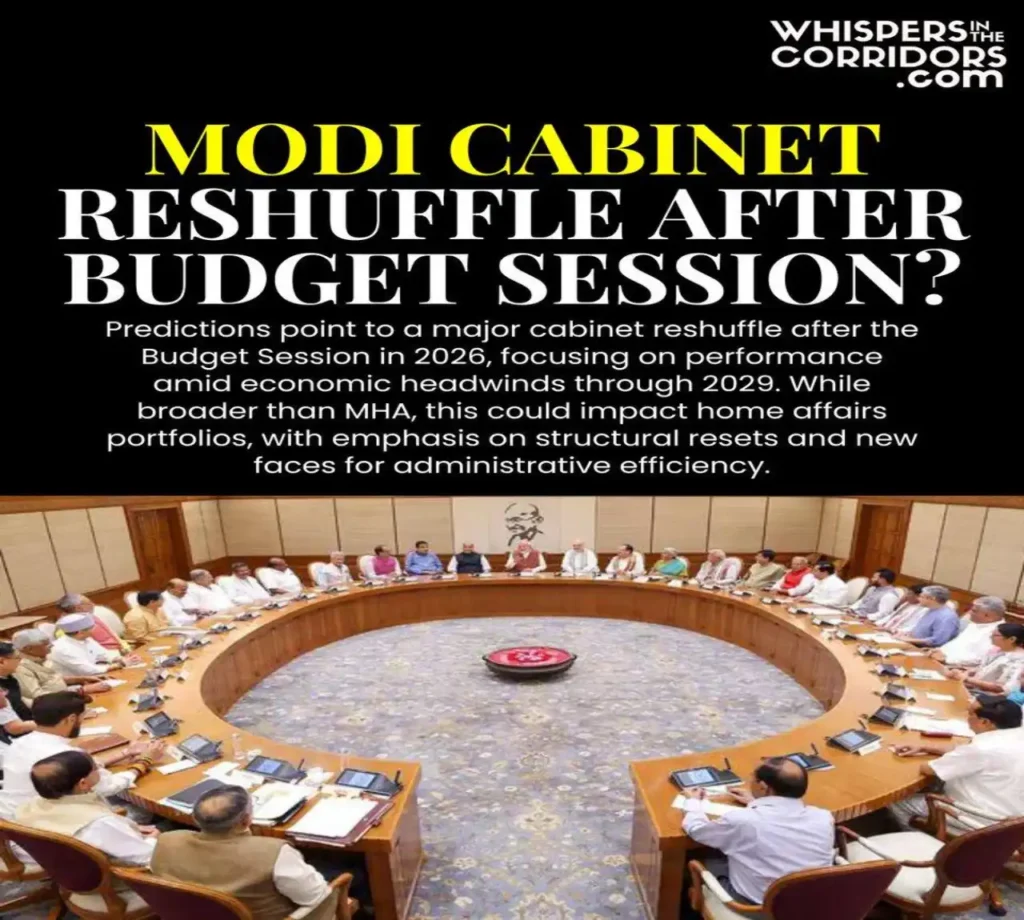
Speculation regarding a potential cabinet reshuffle under the leadership of Prime Minister Narendra Modi has intensified, and a key question is fueling political discourse across the country: will long-standing NDA allies retain their hold on crucial ministries, or will political newcomers and recent supporters secure significant opportunities? Recent political developments suggest that striking a balance between experience, loyalty, and expansion could determine the trajectory of the central government’s next phase.
Reports indicate that the central theme of discussion in political circles is the need to strengthen the government’s outreach ahead of upcoming assembly elections and major national-level political events. This potential reshuffle is being viewed not merely as an administrative change, but as a strategic political move to consolidate alliances and broaden the base of support.
A key topic of discussion is whether leaders who have recently joined the ruling coalition from the opposition camp—or those supporting it—might be given positions in the central government. Political observers have taken note of the growing speculation surrounding leaders linked to regional political shifts across various states.
At the same time, long-standing NDA allies remain pivotal to the alliance’s structure. Parties that have supported the coalition for years are expected to seek representation and influence in ministries related to infrastructure, agriculture, transport, rural development, and economic planning.
Political observers believe that any reshuffle could also reflect regional priorities. In states where the ruling coalition seeks to expand its political footprint, greater emphasis might be placed on ministerial appointments aimed at enhancing local representation and organizational strength.
Another aspect under discussion is the evaluation of performance. Cabinet reshuffles are often used to recognize ministers who have performed well, while also reassigning responsibilities in areas where progress has been slower than expected. This allows governments to shift priorities without altering their broader policy direction.
The growing role of coalition politics following recent elections has made the task of managing the coalition even more critical. Consequently, decisions regarding ministerial posts may involve negotiations among multiple parties concerning governance goals and political expectations.
Observers also note that decisions made by Prime Minister Modi’s cabinet have consistently emphasized combining political messaging with administrative functioning. Past reshuffles have frequently seen the induction of younger faces, while experienced leaders were retained in strategically important ministries.
Although no official announcement has been made yet, speculation continues within political circles. Whether priority is given to old allies or new political supporters in the upcoming cabinet, the final composition is expected to reflect both governance priorities and the evolving political landscape.
Until formal decisions are announced, all discussions remain confined to political speculation. However, interest in the cabinet remains high, as these choices could influence both the government’s direction and its political momentum in the coming months.