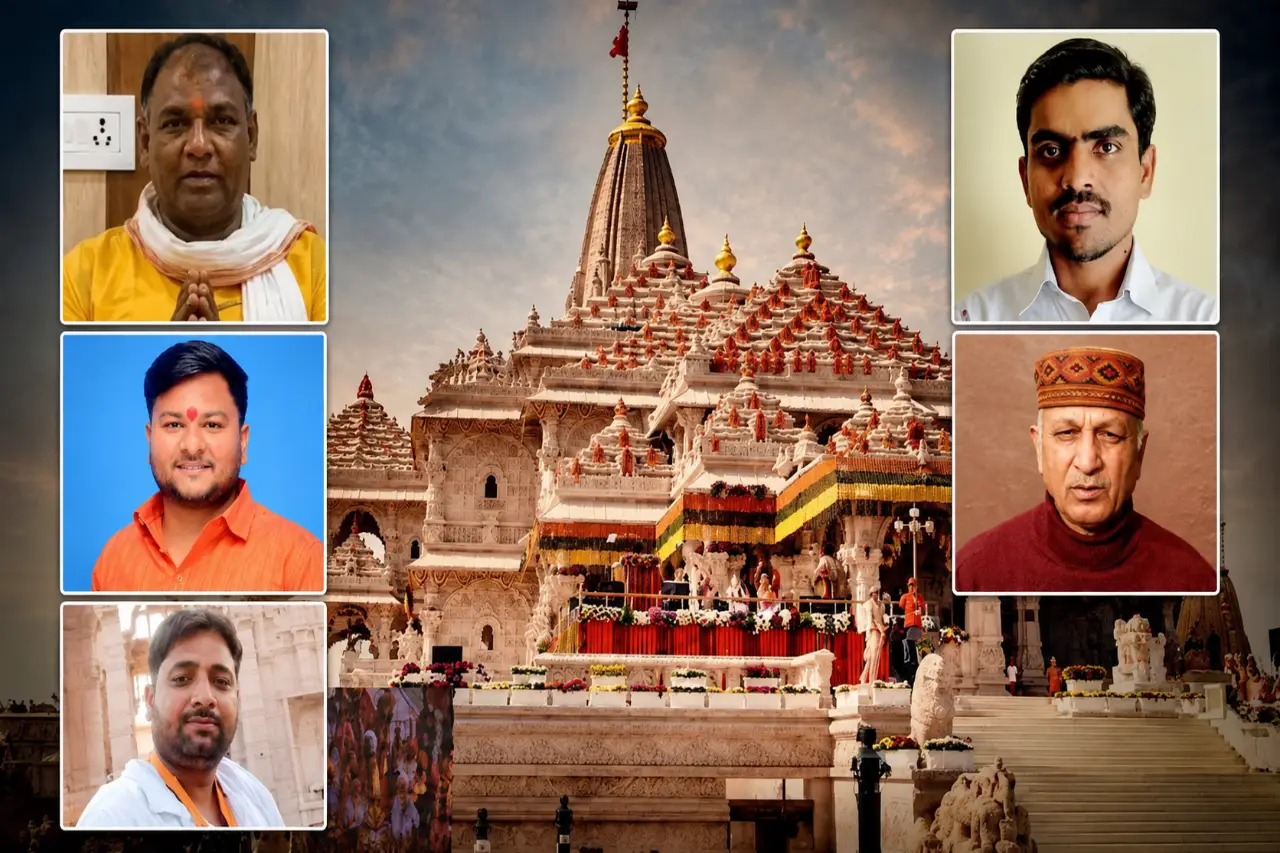
Ram Mandir Offering Theft Case Lawyers Decline to Represent the Accused (image source: "Chat GPT AI Generated Visuals")
Our Daily Dose of Truth and Trends
Ram Mandir Offering Theft Case Lawyers Decline to Represent the Accused (image source: "Chat GPT AI Generated Visuals")
A new development has emerged in the alleged Ram Mandir donation theft case in Ayodhya, drawing nationwide attention. Reports indicate that lawyers in Ayodhya have refused to represent the accused. As the case involves allegations regarding the misuse of donations meant for the Ram Mandir, it is sensitive from both legal and emotional perspectives.
According to recent reports, eight individuals were arrested in connection with the alleged misappropriation of temple offerings. During the investigation, officials reportedly recovered approximately ₹80 lakh in cash. Subsequently, a Special Investigation Team (SIT) took over the probe, examining aspects related to the donation counting process as well.
The situation escalated further following the Faizabad Bar Association’s resolution that its members would not represent the accused in court. According to reports, the association also announced that internal disciplinary action would be taken against any member who violated this decision.
Members of the legal community have reportedly justified the decision, stating that these allegations have deeply hurt public sentiment, as the matter involves temple donations. Media reports have highlighted the profound emotional significance of this issue in Ayodhya.
At the same time, legal experts often point out that under the justice system, every accused person has the right to legal representation and a fair trial, regardless of the charges. Consequently, the refusal by local lawyers to represent them has sparked a debate about balancing public sentiment with legal principles.
Reports indicate that the accused were produced in court, and subsequent information reveals that all eight have been remanded to judicial custody for 14 days while the investigation continues.
This dispute has moved beyond the local courts. Separate petitions were filed demanding a comprehensive investigation into alleged irregularities concerning donations made for the Ram Mandir. However, the Supreme Court rejected requests for an immediate hearing and indicated that the standard legal process should take its course.
Political reactions to this have also emerged. Opposition leaders demanded a more comprehensive investigation and a robust investigative mechanism, while some groups called for greater transparency in temple administration and the management of donations.
For many, this matter is not merely about allegations involving money, but also concerns public trust in institutions rooted in faith and charity. As the legal process unfolds, it is expected that the focus will remain on evidence, investigation findings, and court proceedings rather than on public reactions.
The next phase of this matter may center on court proceedings, details of the investigation, and whether further legal or administrative action is recommended. At present, the matter is subject to judicial review, and no final verdict regarding these allegations has been reached yet.