
Karnataka Makes FIRs Mandatory In Revenge Porn, Sextortion Cases (image source: "Chat GPT AI Generated Visuals")

Our Daily Dose of Truth and Trends
Karnataka Makes FIRs Mandatory In Revenge Porn, Sextortion Cases (image source: "Chat GPT AI Generated Visuals")
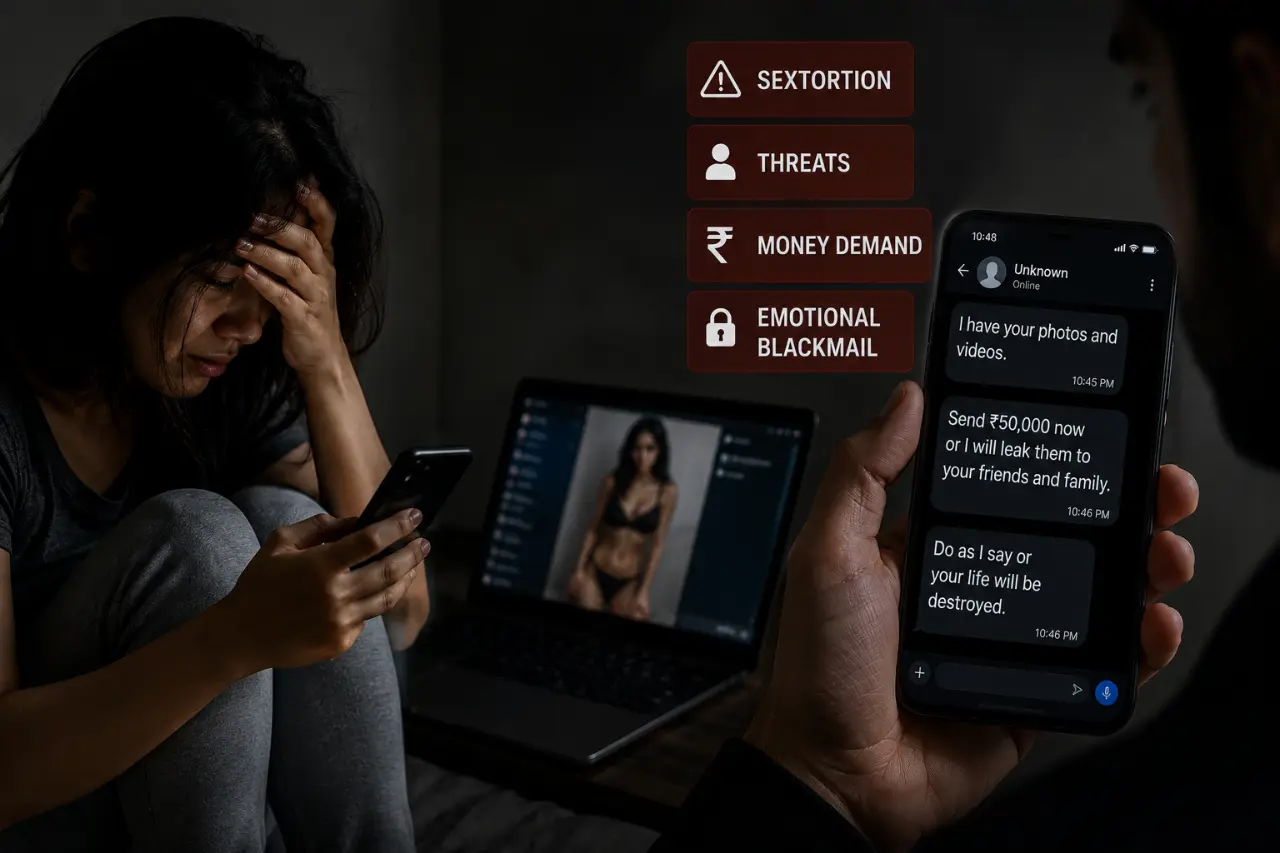
With the aim of strengthening digital security and protecting victims of online abuse, Karnataka has made it mandatory for the police to register FIRs in cases involving revenge porn, sextortion, and the sharing of private content without consent. This directive seeks to ensure swift legal action and minimize delays in handling complaints related to sensitive cybercrimes.
A new standing order issued by the Karnataka Police clarifies that sharing, publishing, forwarding, or transmitting private photos or videos without an individual’s consent constitutes a cognizable offense. Crucially, the order specifies that consent to create or record content does not automatically imply consent to distribute or circulate that content.
Officials implemented this policy following concerns that certain complaints were being delayed or dismissed based on the assumption that the victims had initially consented to the recording of their photos or videos. Under the new guidelines, police stations have been instructed to avoid such interpretations and to mandatorily register an FIR.
The order directs police officers to register FIRs under the relevant sections of the Bharatiya Nyaya Sanhita (BNS), 2023, and applicable sections of the Information Technology Act, 2000. Officials stated that additional charges could also be invoked in cases involving intimidation, coercion, or extortion.
This policy places special emphasis on addressing cases of ‘sextortion,’ where individuals are threatened—using their private content—to extort money, personal favors, or subject them to further exploitation. Police have been instructed to attend to such complaints immediately and initiate the investigation process without delay.
Another key aspect of this directive is the adoption of a victim-focused approach. Police personnel have been instructed to maintain confidentiality, avoid victim-blaming, and ensure that female complainants receive appropriate support during the filing of the complaint and the subsequent investigation.
To improve response times, the Karnataka Police has instructed police stations to register a ‘Zero FIR’ in cases where jurisdiction is unclear and subsequently transfer the complaint to the appropriate authority. Investigators are also expected to preserve digital evidence and collaborate with the cybercrime division to block or remove harmful content wherever possible.
Experts in cyber abuse cases often note that victims frequently refrain from reporting incidents due to fear, embarrassment, or the concern that their complaints will not be taken seriously. Research into reporting systems has emphasized the critical need for rapid response mechanisms and victim-sensitive procedures in cases involving non-consensual intimate content.
This move comes at a time when concerns regarding digital privacy are mounting alongside the increasing use of social media platforms, messaging apps, and AI-generated content. Researchers have also warned that technologies like deepfakes can heighten the risks associated with online exploitation and image-based abuse.
Overall, Karnataka’s decision demonstrates a robust legal and procedural approach to cybersecurity. By making the filing of an FIR mandatory and strengthening victim protection, authorities aim to ensure that complaints regarding online sexual exploitation receive prompt attention and undergo formal investigation, rather than being stalled by procedural delays.