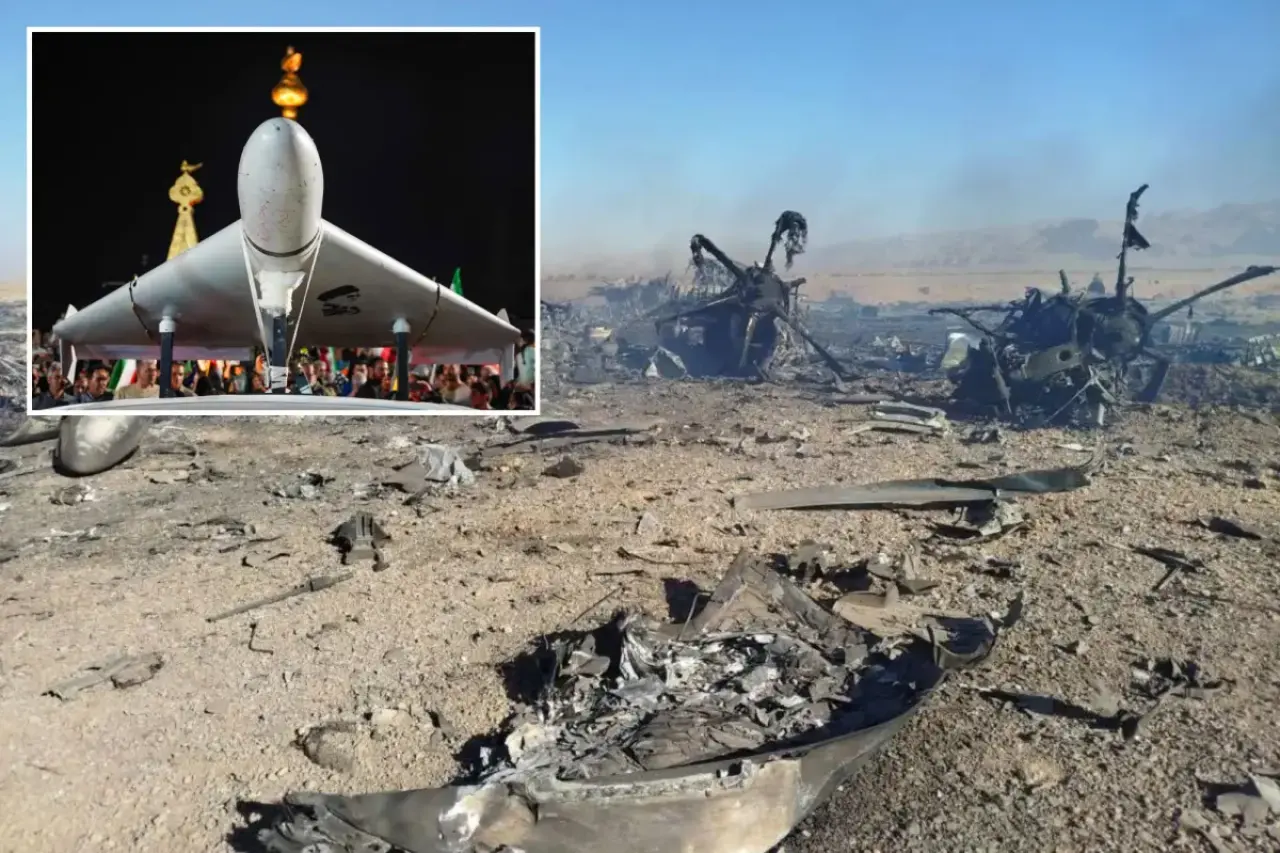
Irans Jellyfish Drone Swarm Flies F15 Destroyed (image source: New York Post)
Our Daily Dose of Truth and Trends
Irans Jellyfish Drone Swarm Flies F15 Destroyed (image source: New York Post)
A new report has garnered international attention, detailing an incident where a US fighter pilot spotted a peculiar formation of drones over Iran moving together in a “jellyfish-like” shape. This event has sparked discussions among military analysts and intelligence observers regarding the future of drone warfare and coordinated aerial systems.
According to sources familiar with the post-mission briefing, the pilot was flying an F-15 during an operation over Iran when he observed multiple aerial objects moving in unison within a specific pattern. He was subsequently forced to eject. The strange incident was later discussed during intelligence debriefings.
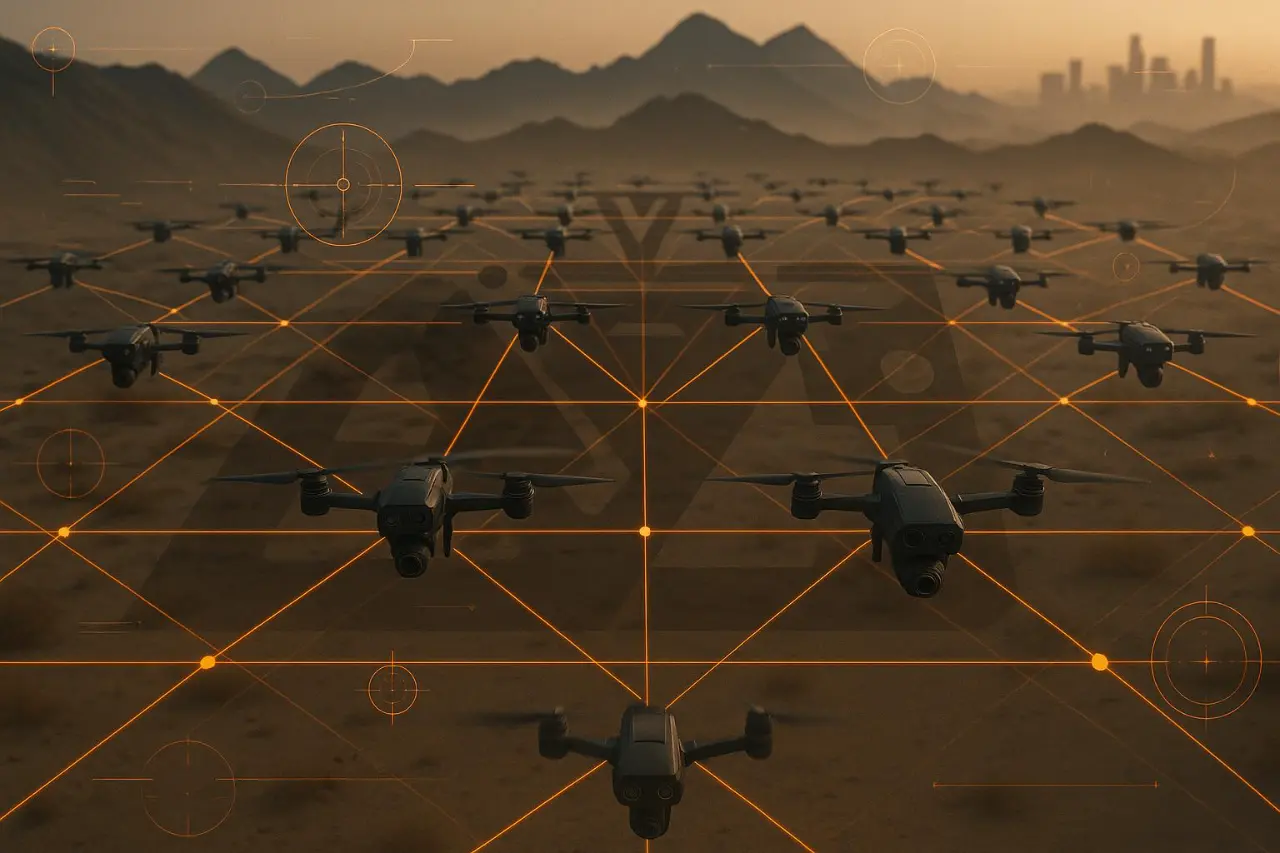
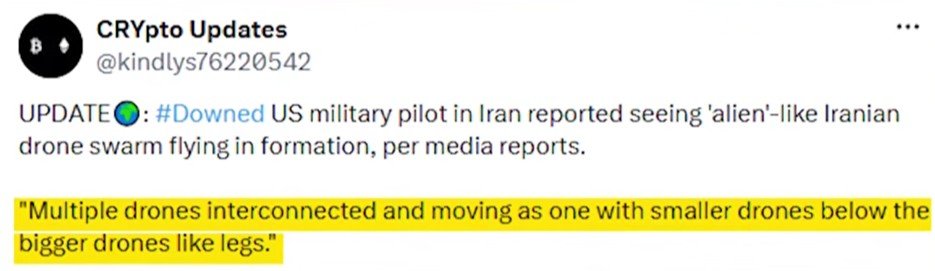
The pilot reportedly described these objects as interconnected and moving together as a single, large structure. Additionally, smaller, drone-like units were visible beneath the formation, giving it a jellyfish-like appearance. This description quickly attracted attention due to the complexity of such synchronized movement.
According to reports, the incident occurred shortly before the aircraft was shot down. Investigators have not yet publicly determined whether the observed structure was directly linked to the incident, and the official investigation is ongoing.
According to reports, military and intelligence officials discussed the pilot’s account during post-incident reviews. Some analysts believed these details might point to the drone’s capability for more advanced coordination, while others advised caution, noting that the ability to perceive and recall events can be affected in high-stress situations.
Drone swarm technology is a field attracting widespread attention. Unlike the operation of a single drone, the swarm concept involves multiple unmanned systems working in coordination through networking, shared navigation, or distributed decision-making. Such concepts have been studied globally for years because they offer the potential for increased flexibility and reduced risk.
Experts note that coordinated drone systems are not entirely new; however, if reports of drone groups operating with a high degree of synchronization in combat scenarios prove true, it could represent a more advanced level of deployment. Current research on UAVs is increasingly focusing on communication, automation, and swarm-like flight behavior.
The report has also sparked considerable curiosity due to the mention of a “jellyfish” shape. Although the terminology may sound unusual, analysts generally interpret such descriptions as references to visual resemblance rather than evidence of extraterrestrial or mysterious phenomena.
Another aspect receiving attention is the challenge of understanding aerial engagements within a rapidly evolving combat environment. Factors such as visibility conditions, altitude, speed, and stress can influence how pilots perceive the situation during active operations.
Questions are also being raised about whether future aerial combat will increasingly rely on multi-layered drone formations rather than primarily on conventional aircraft. Many defense studies identify autonomous and semi-autonomous systems as a key area of development.
So far, no public evidence has independently confirmed exactly what the pilot saw in the sky. Intelligence reviews and reporting are investigating whether the incident stemmed from advanced drone capabilities, an unusual strategic deployment, or an entirely different cause.
For now, this incident is part of an unfolding narrative that has refocused attention on aerial technology, battlefield innovation, and the rapid pace at which drone systems are transforming modern military strategy.