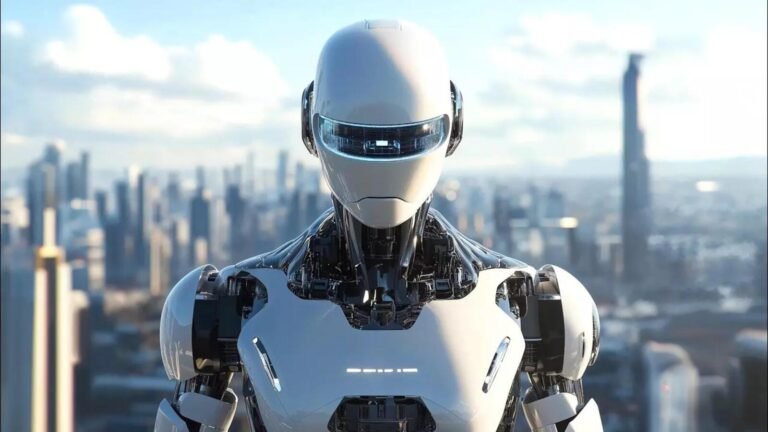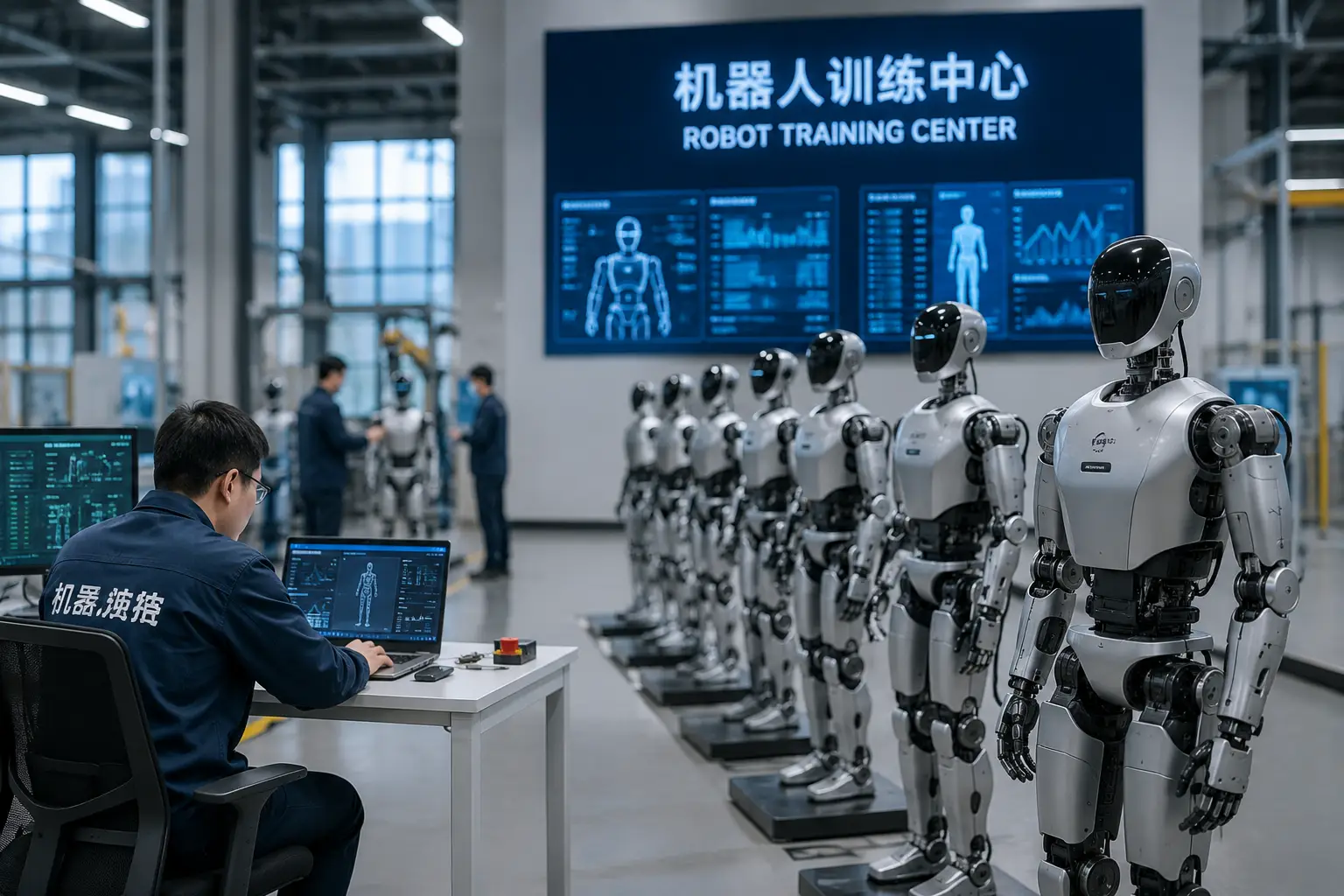
How China Is Training Robots to Prepare Them for Future Workforce Jobs ((image source: "Chat GPT AI Generated Visuals")
Our Daily Dose of Truth and Trends
How China Is Training Robots to Prepare Them for Future Workforce Jobs ((image source: "Chat GPT AI Generated Visuals")
China is rapidly advancing toward a future grounded in humanoid robots and artificial intelligence. Across numerous Chinese cities, advanced robot training centers are being established where machines are being prepared for real-world tasks within factories, logistics hubs, retail stores, and even public services. The country’s robotics industry has now moved beyond mere entertainment-oriented demonstrations to place a strong emphasis on workforce automation.
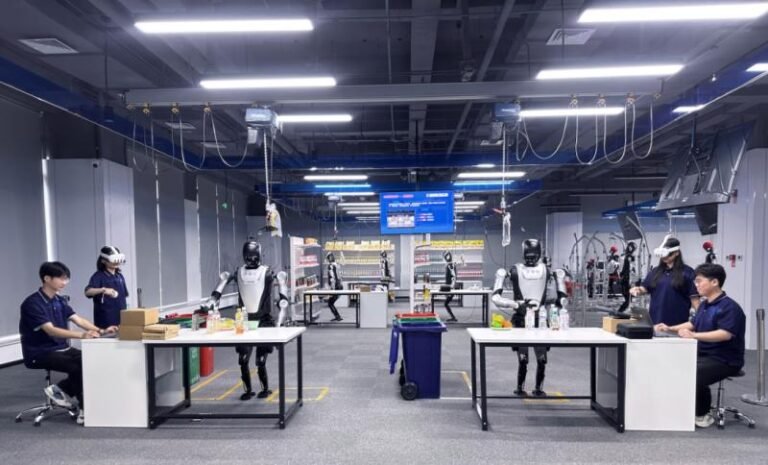
According to recent reports, Chinese companies and government-backed organizations are constructing large-scale facilities where humanoid robots are trained to perform repetitive and practical tasks—much like their human counterparts. These robots are acquiring skills such as folding clothes, sorting parcels, lifting packages, scanning barcodes, organizing shelves, and assisting in warehouse operations.
According to a report, one of China’s largest humanoid robot training centers is located in Beijing’s Shijingshan District, where over 100 humanoid robots are undergoing continuous training programs. This center recreates real-world environments—such as supermarkets, logistics hubs, factories, and homes—to enable the robots to practice everyday work activities.
The robots repeat tasks thousands of times and collect data, which improves the precision of their movements and their decision-making capabilities. Engineers closely monitor the machines and provide them with training data to enhance their performance and minimize errors during operations.
Unlike earlier robotics demonstrations, which focused primarily on entertainment, China’s current strategy emphasizes the deployment of a practical workforce. A CNBC report indicates that Chinese developers now seek to have robots evaluated based on their capability to perform useful tasks in real-world environments.
The objective is to develop humanoid robots for industries grappling with labor shortages, rising operational costs, and an increasing demand for automation. Manufacturing, logistics, retail, healthcare support, and public infrastructure are among the sectors expected to benefit from robotic workers in the future.
China has identified robotics and artificial intelligence as key industries for long-term economic growth and global technological leadership. Analysts believe that the country is rapidly investing in robotics infrastructure, much in the same way it previously did in the fields of electric vehicles and semiconductor manufacturing.
Government support, funding programs, and rapid industrial expansion are helping Chinese robotics companies scale up production and accelerate research. Industry experts estimate that China currently dominates global humanoid robot shipments.
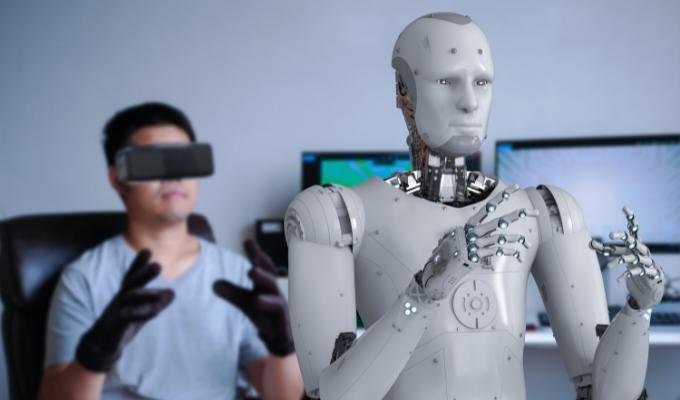
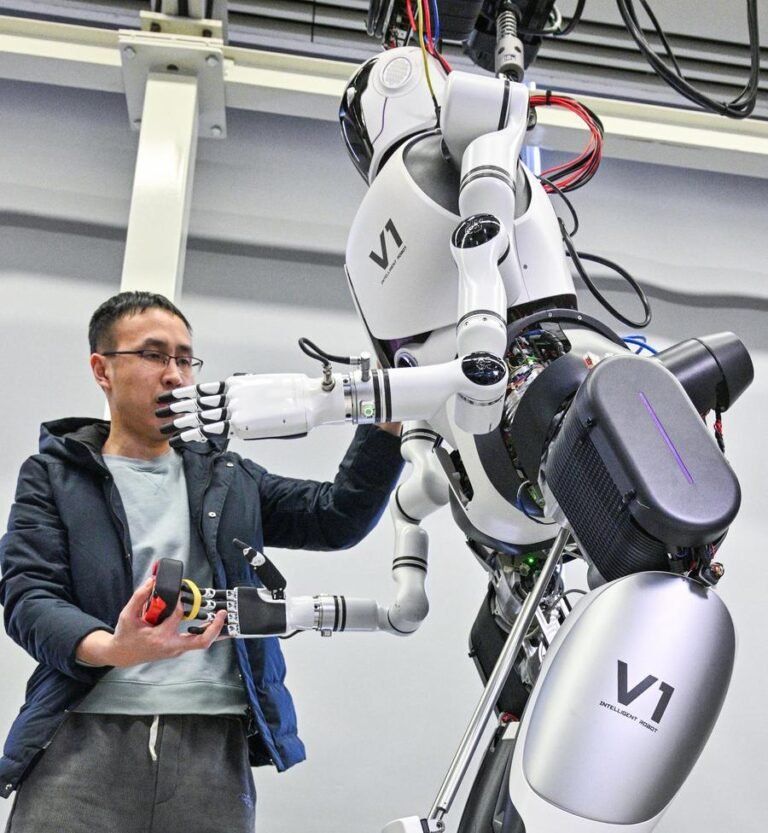
Many Chinese robotics companies are utilizing advanced motion-capture systems and AI-based training models to teach robots how humans walk and perform tasks. Some humanoid robots are trained through demonstrations performed by humans, wherein operators carry out specific actions while the robots collect data on motion and the surrounding environment.
These training techniques help robots enhance their balance, object-handling methods, gait, and coordination skills. Experts believe that the continuous collection of data is crucial for enabling robots to operate safely and effectively in real-world environments.
Many Chinese robotics companies are utilizing advanced motion-capture systems and AI-based training models to teach robots how humans walk and perform tasks. Some humanoid robots are trained through demonstrations performed by humans, wherein operators carry out specific actions while the robots collect data on motion and the surrounding environment.
These training techniques help robots enhance their balance, object-handling methods, gait, and coordination skills. Experts believe that the continuous collection of data is crucial for enabling robots to operate safely and effectively in real-world environments.
The rapidly growing trend of humanoid robots has raised concerns regarding job displacement and shifts within the workforce. Some experts believe that, in the future, automation may lead to a decline in demand for specific types of repetitive manual tasks.
However, others argue that, rather than completely replacing humans, robots will primarily serve to assist them. Employment opportunities are also expected to emerge from new industries related to robot training, maintenance, AI development, and robotics engineering.
Despite rapid progress, several challenges still limit the widespread adoption of robots. Experts note that humanoid robots continue to struggle with adapting to unpredictable situations, navigating complex environments, and consistently executing intricate, human-like movements.
Researchers are also working on improving battery life, mobility, safety systems, and overall AI comprehension to enable robots to fully integrate into everyday work environments.
The expansion of robotics in China signals a major shift toward AI-powered automation in the coming years. As humanoid robots become smarter, more affordable, and more capable, industries worldwide are likely to increasingly adopt robotic systems for physical and repetitive tasks.
Experts believe that future workplaces may witness close collaboration between humans and smart robots, particularly in the sectors of manufacturing, logistics, healthcare, transportation, and public infrastructure.
As part of its long-term technology strategy, China is making massive investments in humanoid robots and AI-based automation. Through advanced training centers, real-world simulations, and large-scale robotics programs, the country is preparing machines to assume actual operational roles in the future.
Although challenges persist, the rapid pace of development suggests that humanoid robots could soon become a common fixture in workplaces worldwide. The global race for leadership in the field of robotics is intensifying, and China appears fully determined to remain at the forefront of this technological transformation.